
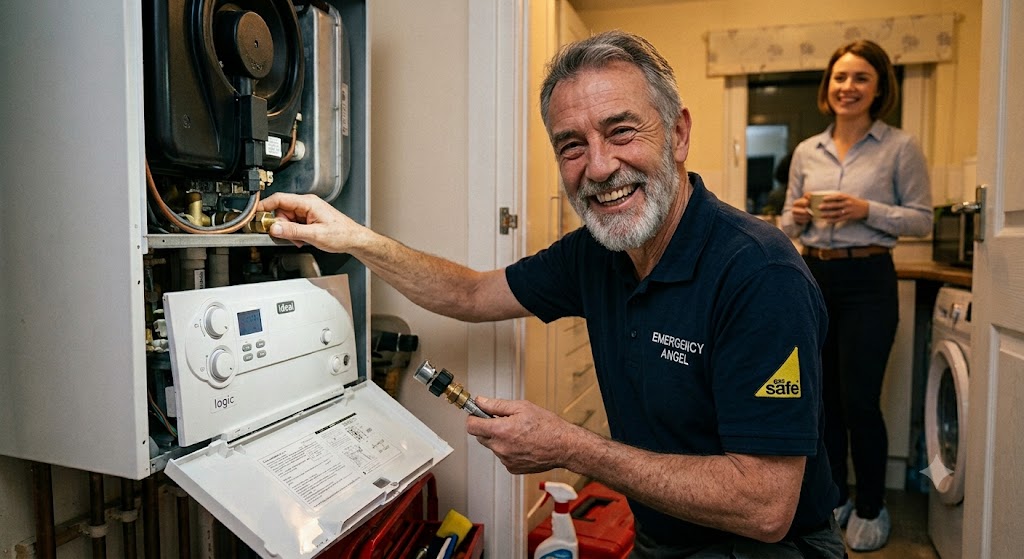
Boiler Breakdown at Night: A Complete Emergency Heating Guide for UK Homeowners
A boiler breakdown is one of the most inconvenient problems a homeowner can experience, especially when it happens unexpectedly during the evening, overnight, or in the middle of winter. When temperatures drop and your home depends on your heating system to provide warmth and hot water, a boiler suddenly stopping can quickly become a stressful situation.
Many homeowners rarely think about their boiler until something goes wrong. Throughout the year, it quietly provides heating, hot water, and comfort without demanding much attention. However, behind this everyday convenience is a complex appliance containing mechanical, electrical, and safety components that must all work together correctly.
Like any household appliance, boilers can develop faults over time. Some problems appear gradually, while others happen suddenly without much warning. A small issue affecting one component can eventually cause the entire system to shut down, leaving homeowners without heating or hot water when they need it most.
A boiler breakdown at night can feel particularly urgent. Many heating companies operate reduced hours outside normal working times, and homeowners may be unsure whether they should attempt simple checks, wait until morning, or arrange an emergency heating engineer.
Understanding how to respond during a boiler emergency can make the situation much easier to manage. Knowing the warning signs, carrying out safe basic checks, understanding when professional help is needed, and knowing what an emergency heating engineer will do can help protect your home and restore comfort as quickly as possible.
This guide explains what UK homeowners need to know about emergency boiler breakdowns, including common causes, immediate steps to take, safety considerations, repair options, and ways to reduce the chance of future heating problems.
Why Boiler Breakdowns Often Happen at the Worst Possible Time
Many homeowners notice that boiler problems often seem to appear at the exact moment when heating is needed most. A system that has worked reliably for months can suddenly stop operating when temperatures begin to fall and the heating is switched on more frequently.
This does not necessarily mean that cold weather directly causes the breakdown. Instead, increased demand often reveals problems that have been developing quietly inside the appliance over time.
During warmer months, a boiler may only operate occasionally to provide hot water. Internal components experience less stress, and small issues may not affect performance enough to become noticeable. Once winter arrives, the appliance may operate for several hours each day, repeatedly heating water, maintaining temperatures, and circulating warmth throughout the property.
This increased workload places additional pressure on important components such as the ignition system, fan, pump, heat exchanger, sensors, thermostat, pressure system, and electronic control board.
If any of these parts are already showing signs of wear, the extra demand created by winter operation can expose the weakness and cause the boiler to stop working.
Another reason breakdowns commonly occur during colder months is that heating systems may have remained unused for long periods. Pumps and valves can become stiff after inactivity, condensate pipes can freeze during severe weather, and pressure problems can remain unnoticed until the heating system is restarted.
This is one of the reasons professional boiler servicing is recommended every year. Regular maintenance allows engineers to identify developing issues before they become emergency situations.
However, even a well-maintained boiler can occasionally fail. No mechanical appliance lasts forever, and unexpected component failures can happen despite careful maintenance and correct usage.
The First Steps To Take When Your Boiler Breaks Down at Night
When a boiler suddenly stops working, many homeowners immediately worry about the cost of repairs or how long they will be without heating. The first response should be to carry out a few safe checks and gather information about what has happened.
The first thing to determine is whether the problem is limited to the boiler or whether it affects the wider property.
Check whether other electrical appliances are working. A power cut, tripped electrical switch, or issue with the electricity supply can prevent a boiler from operating.
If other appliances are working normally, look at the boiler display or control panel. Modern boilers usually provide information through error codes, warning lights, or messages that indicate when the appliance has detected a problem.
These codes can provide useful information for engineers when diagnosing the fault. However, an error code does not always mean the issue can be solved with a simple reset.
Before calling for emergency assistance, homeowners should check a few basic points:
Confirm that the thermostat is switched on and requesting heat. Check that heating controls have not accidentally been changed or turned off. Make sure the boiler has power. Check whether the pressure gauge shows an unusually low or high reading.
These simple checks can sometimes identify minor problems, but homeowners should never remove boiler covers, adjust internal components, or attempt repairs involving gas or combustion systems.
Gas appliances contain specialist components that require professional training and equipment. Any internal work must only be carried out by a Gas Safe registered engineer.
Is a Boiler Breakdown Always an Emergency?
Not every boiler problem requires an immediate emergency call-out. The urgency depends on the nature of the fault, the risks involved, the weather conditions, and the needs of the people living in the property.
A loss of heating during mild weather may be inconvenient but manageable for a short period. However, the same issue during freezing temperatures can become much more serious, especially for households with young children, elderly residents, or vulnerable occupants.
A boiler emergency generally involves a situation where there is a risk to safety, significant damage could occur, or essential heating and hot water need to be restored quickly.
Examples of situations that require urgent professional attention include suspected gas leaks, carbon monoxide concerns, major water leaks, damaged flues, repeated boiler shutdowns, or complete heating failure during severe cold weather.
If you smell gas, this should always be treated as an emergency. Do not attempt to locate the source yourself or continue operating appliances that may create a spark.
Turn off the gas supply if it is safe to do so, avoid electrical switches, ventilate the property where possible, leave the building if necessary, and seek professional assistance.
Carbon monoxide concerns should also be taken seriously. Carbon monoxide is a colourless and odourless gas, meaning it cannot be detected without an alarm or specialist equipment.
A correctly installed and maintained boiler, combined with a working carbon monoxide detector, provides important protection. However, any suspicion of carbon monoxide exposure requires immediate action.
Understanding Common Causes of Emergency Boiler Breakdowns
Boilers can stop working for many different reasons. Some faults are relatively simple and may require a straightforward repair, while others involve complex internal components that require specialist diagnosis.
Understanding common boiler problems can help homeowners recognise symptoms, provide useful information to engineers, and make informed decisions when arranging emergency assistance.
Low Boiler Pressure Problems
Low pressure is one of the most common reasons a boiler may stop operating correctly.
Central heating systems rely on the correct water pressure to circulate heat effectively around the property. If pressure falls below the level required by the appliance, many modern boilers automatically shut down as a safety precaution.
Pressure can drop for several reasons. A small leak somewhere within the heating system may gradually reduce pressure over time. This leak may not always be obvious because it can occur inside pipework, radiators, valves, or internal boiler components.
Other possible causes include problems with the expansion vessel, pressure relief valve, or previous repairs that have affected system performance.
Homeowners can usually check the boiler pressure using the built-in gauge or digital display. The correct pressure range depends on the specific appliance, so manufacturer guidance should always be followed.
If pressure drops repeatedly after being restored, this usually indicates that an underlying issue requires professional investigation.
A temporary pressure adjustment may restore operation, but recurring pressure problems should not be ignored because they can place additional strain on internal components and lead to further faults.
Frozen Condensate Pipe Problems During Winter
Frozen condensate pipes are one of the most common causes of boiler breakdowns during periods of cold weather. Modern condensing boilers produce water as part of their normal operation, and this water is removed from the appliance through a condensate pipe connected to a suitable drainage point.
In many homes, part of this pipe runs externally before reaching the drain. During freezing temperatures, water inside the pipe can turn into ice, creating a blockage that prevents condensate from leaving the boiler.
When the boiler detects that condensate cannot drain correctly, it may shut down automatically as a safety measure. This can happen suddenly, leaving homeowners without heating or hot water.
Typical signs of a frozen condensate pipe include the boiler starting normally before switching off, error messages appearing on the display, unusual gurgling sounds, or the appliance repeatedly attempting to restart without success.
In some cases, homeowners may be able to identify the issue by checking the external condensate pipe. If the pipe is accessible and the blockage is caused by ice, carefully warming the pipe using warm water may help restore drainage. Boiling water should never be used because sudden temperature changes can damage plastic pipework.
However, if the boiler does not restart after the pipe has been safely thawed, or if the problem happens repeatedly, a professional engineer should inspect the system.
An emergency heating engineer can determine whether the issue was caused only by freezing or whether there are additional problems affecting the condensate system. They may recommend improvements such as additional insulation, repositioning pipework, or correcting installation issues to reduce the likelihood of future winter failures.
Ignition and Flame Failure Problems
The ignition system is one of the most important parts of any gas boiler. It is responsible for safely lighting the burner and ensuring that combustion takes place correctly.
If the boiler cannot ignite properly, it may shut down and display a fault code. This safety response prevents gas from continuing to flow when the appliance cannot confirm that a stable flame has been established.
Ignition problems can occur for several reasons. The ignition electrode may become worn, the flame sensor may fail to detect the burner flame, gas supply problems may affect operation, or electrical components controlling ignition may develop faults.
Homeowners often notice ignition problems because the boiler repeatedly attempts to start but fails. Some appliances may make clicking sounds as they attempt to ignite before displaying an error message.
Although restarting the boiler may occasionally clear a temporary fault, repeated ignition failures usually indicate that professional diagnosis is required.
A qualified heating engineer will inspect the relevant components, test safe operation, and determine whether parts require cleaning, adjustment, or replacement.
Ignition faults should never be ignored because they affect the fundamental process that allows the boiler to burn gas safely. Continuing to reset a boiler repeatedly without identifying the cause may allow a developing problem to become more serious.
Electrical Faults That Can Cause Boiler Failure
Although boilers use gas as their primary fuel source, modern appliances depend heavily on electricity. Electrical systems control ignition, safety monitoring, temperature regulation, pumps, fans, sensors, and communication with heating controls.
This means an electrical problem can prevent a perfectly sound boiler from operating.
Common electrical causes of boiler breakdowns include power supply problems, damaged wiring, failed circuit boards, faulty sensors, thermostat issues, and problems with external heating controls.
The electronic control board is effectively the brain of many modern boilers. It processes information from sensors and controls when different components should operate. If the control board develops a fault, the boiler may behave unpredictably or stop working completely.
Electrical faults can sometimes be difficult to diagnose because symptoms may appear similar to mechanical problems. For example, a boiler that refuses to ignite could have an ignition fault, a sensor issue, or an electronic control problem.
This is why professional testing is important. Engineers use specialist equipment and manufacturer guidance to identify the actual cause rather than replacing parts unnecessarily.
Homeowners should never attempt electrical repairs inside a boiler. Even when a problem appears simple, internal components may carry electrical risks and require specialist knowledge.
Boiler Leaks and Water Damage Risks
A leaking boiler should always be treated seriously. Even a small amount of water escaping from the appliance can indicate a developing fault that requires attention.
Leaks can occur from various parts of the heating system, including internal seals, pumps, valves, pressure components, pipe connections, and heat exchangers.
Some leaks are immediately obvious, while others develop slowly and may only appear as damp marks, staining, corrosion, or a gradual loss of boiler pressure.
Water and electrical components do not mix safely. A leak inside a boiler can potentially damage sensitive electronics, increase corrosion, and create additional faults if it is not repaired.
If you notice water around your boiler, avoid attempting to remove covers or investigate internal parts. Turn off the appliance if it is safe to do so and arrange professional assistance.
An emergency heating engineer will assess where the water is coming from, identify the failed component, and advise whether a repair can be completed immediately or whether further work is required.
Unusual Boiler Noises That Should Not Be Ignored
Boilers naturally produce some sounds during operation. Clicking during ignition, the movement of water through pipework, and normal fan operation are all expected.
However, unusual or increasingly loud noises can indicate that something is wrong.
Banging, whistling, vibrating, humming, or gurgling noises may suggest problems such as restricted water flow, trapped air, pump issues, deposits inside the system, or component wear.
A banging noise sometimes referred to as kettling can occur when water inside the heat exchanger becomes too hot due to restricted circulation. This can place unnecessary stress on the appliance and reduce efficiency.
Ignoring unusual sounds may allow a minor issue to develop into a larger and more expensive repair.
When arranging an emergency call-out, describing the noise accurately can help the engineer prepare. Information such as when the sound occurs, whether it happens during ignition or heating operation, and whether it is getting worse can provide useful diagnostic clues.
When a Boiler Problem Becomes a Gas Safety Emergency
Some boiler problems are inconvenient, while others represent a genuine safety concern. Gas appliances must always be treated with respect because faults involving combustion, gas supply, or flue systems can create serious risks.
A gas safety emergency may involve a suspected gas leak, carbon monoxide concerns, or a boiler that is not safely removing combustion gases.
If you smell gas, do not ignore it or assume the smell will disappear. Gas has an added odour specifically to help people detect leaks.
Do not use electrical switches, light matches, or create flames if you suspect gas is present. If possible, turn off the gas supply at the emergency control valve and leave the property before seeking professional help.
Carbon monoxide is another serious concern. It is produced when fuels such as gas do not burn correctly. Because it has no smell or colour, people cannot rely on their senses to detect it.
Symptoms of carbon monoxide exposure can include headaches, dizziness, nausea, tiredness, and confusion. If carbon monoxide is suspected, leave the property immediately and seek emergency assistance.
Regular servicing, correct installation, and working carbon monoxide alarms all help reduce risk, but any suspected safety issue requires immediate professional attention.
What an Emergency Heating Engineer Checks During a Boiler Call-Out
When an emergency heating engineer arrives at your property, the first priority is establishing whether the boiler can operate safely.
The engineer will usually begin by discussing the symptoms you have experienced. Details such as when the boiler stopped working, whether error codes appeared, unusual sounds, previous problems, and any recent changes to the heating system can help guide the investigation.
A visual inspection is then carried out. The engineer checks the condition of the appliance, surrounding pipework, visible components, and installation environment.
They may inspect the boiler pressure, electrical supply, controls, flue arrangement, and condensate system depending on the symptoms reported.
Specialist diagnostic equipment may be used to test components, measure operating conditions, and confirm the cause of the failure.
The aim is not simply to restart the boiler but to identify why it stopped working and ensure it can operate safely once repaired.
Where possible, engineers will complete repairs during the visit. However, some faults require replacement parts that may need to be ordered separately.
A professional engineer should always explain what has failed, what repair is required, and whether there are any longer-term considerations for the appliance.
How Quickly Can an Emergency Heating Engineer Arrive?
One of the biggest concerns during a boiler breakdown is how long it will take before professional help arrives. When your home has no heating or hot water, especially during cold weather, waiting for a repair can feel extremely stressful.
The response time of an emergency heating engineer depends on several factors, including your location, the time of day, weather conditions, engineer availability, and the seriousness of the fault.
Emergency heating services are designed to provide faster assistance than standard appointments, particularly when there is a safety concern or a complete loss of essential heating.
During periods of extreme cold weather, demand for heating engineers often increases significantly. Many homeowners experience problems at the same time when temperatures drop, which can create busier schedules for repair companies.
This is why it is beneficial to contact an emergency service as soon as you recognise that your boiler has developed a serious fault. Early contact allows engineers to assess the situation, provide advice, and arrange attendance as quickly as possible.
When speaking with an emergency heating provider, providing accurate information can help them prioritise the call correctly. Details such as whether there is a gas smell, whether water is leaking, whether the boiler has completely stopped, and whether vulnerable people are affected can all influence the urgency of the response.
A professional emergency engineer understands that heating failures are not just inconvenient. In many homes, heating and hot water are essential for maintaining a safe and comfortable environment.
How Much Does Emergency Boiler Repair Cost in the UK?
The cost of emergency boiler repair varies depending on the type of fault, the time of the call-out, the location of the property, and whether replacement parts are required.
Emergency repairs are often more expensive than routine maintenance because engineers may need to attend outside normal working hours, including evenings, weekends, and bank holidays.
However, the final cost depends on what has actually failed. Some problems may only require a minor adjustment, while others may involve replacing important components such as pumps, sensors, fans, valves, or control boards.
Homeowners should be cautious of choosing a repair service based only on the cheapest price. Boiler repairs involve gas, electricity, and combustion systems, meaning quality and safety should always be the priority.
A reliable emergency heating engineer should provide clear information about the problem, explain the repair required, and outline any costs before carrying out additional work.
In some cases, particularly with older boilers, the engineer may advise that repair costs need to be compared against the long-term value of replacing the appliance.
A boiler that repeatedly breaks down, requires expensive parts, or operates far below modern efficiency standards may no longer be economical to repair.
A professional assessment allows homeowners to make an informed decision rather than spending money repeatedly on an appliance approaching the end of its useful life.
Emergency Boiler Repairs for Families During Winter
A boiler breakdown is inconvenient at any time of year, but during winter it can become a much more serious problem.
Cold temperatures can quickly affect the comfort of a property, especially overnight when temperatures continue to fall. Homes with young children, elderly residents, or people with health conditions may be particularly affected by a loss of heating.
This is why emergency heating services play an important role during the colder months. Their purpose is not only to repair appliances but also to restore safe living conditions as quickly as possible.
While waiting for an engineer, homeowners can take practical steps to reduce heat loss. Keeping doors closed between rooms, using additional clothing or blankets, and preventing unnecessary drafts can help maintain warmth temporarily.
However, homeowners should avoid unsafe temporary solutions. Using unsuitable heaters, blocking ventilation, or attempting unqualified repairs can create additional risks.
The safest approach is to arrange professional assistance and follow advice from qualified engineers.
Emergency Boiler Problems in Rental Properties
Boiler failures in rental properties require particular attention because landlords have responsibilities for maintaining safe and functional heating systems.
Tenants rely on landlords to ensure gas appliances are properly maintained and that necessary repairs are carried out within a reasonable timeframe.
A broken boiler can significantly affect a tenant’s quality of life, particularly during colder weather when heating and hot water are essential.
Landlords should respond quickly when notified of heating problems and arrange suitable professional assistance.
Regular servicing and preventative maintenance can help reduce the likelihood of emergency breakdowns. Keeping detailed maintenance records also helps demonstrate that appliances have been looked after responsibly.
Although annual gas safety checks are a legal requirement for landlords, routine boiler servicing provides additional benefits by helping identify developing problems before they become emergencies.
A well-maintained heating system is beneficial for both landlords and tenants. Tenants experience fewer disruptions, while landlords reduce the risk of unexpected repair costs and emergency call-outs.
The Importance of Choosing a Gas Safe Registered Engineer
When dealing with any gas appliance problem, choosing the correct engineer is one of the most important decisions a homeowner can make.
In the United Kingdom, engineers carrying out work on gas appliances must be registered with the Gas Safe Register. This ensures they have appropriate training, qualifications, and competence to work safely with gas systems.
Gas safety is not an area where homeowners should take risks. Incorrect repairs, poor installation, or unsafe adjustments can create serious hazards, including gas leaks, carbon monoxide exposure, fire, and damage to property.
A Gas Safe registered engineer has the knowledge and equipment required to diagnose faults correctly and complete repairs safely.
Before allowing work to begin, homeowners can ask to see the engineer’s Gas Safe identification card and confirm that they are qualified for the specific type of appliance being repaired.
This simple step provides additional reassurance that the person working on your boiler has the appropriate authority and expertise.
Can You Fix a Boiler Yourself?
When a boiler breaks down, many homeowners naturally look for quick solutions. Searching online for repair methods or watching videos can make some problems appear simple to fix.
However, gas boilers are complex appliances and should not be repaired by people without the correct qualifications.
Homeowners can safely carry out basic checks, such as confirming power supply, checking thermostat settings, monitoring pressure levels, and looking for obvious external issues.
However, opening the boiler casing, adjusting gas components, changing internal parts, or attempting combustion-related repairs should never be carried out by an unqualified person.
Professional engineers spend years learning how boilers operate safely. They understand how different components interact and how to test whether an appliance is functioning correctly after repairs.
Attempting unauthorised repairs can increase safety risks, damage the appliance, invalidate warranties, and potentially affect insurance coverage.
When a boiler problem goes beyond basic external checks, professional assistance is always the safest option.
How to Prevent Future Boiler Emergencies
Although not every boiler breakdown can be prevented, regular maintenance can significantly reduce the likelihood of unexpected failures.
The most important preventative step is arranging an annual boiler service with a qualified engineer.
During servicing, engineers inspect safety systems, test combustion, examine important components, and identify signs of wear before they become major faults.
Regular servicing also helps maintain efficiency. A boiler operating correctly uses fuel more effectively, which can help reduce unnecessary energy consumption.
Homeowners should also pay attention to warning signs between services. Unusual noises, repeated pressure problems, inconsistent heating, rising energy bills, or frequent error messages should not be ignored.
Small problems are often easier and less expensive to repair than major failures that occur after a component has completely broken.
Keeping the area around the boiler clear, checking carbon monoxide alarms regularly, and ensuring external flues and vents remain unobstructed are also sensible maintenance steps.
Preparing Your Home Before an Emergency Heating Engineer Arrives
When a boiler breaks down unexpectedly, homeowners often focus entirely on getting the heating restored as quickly as possible. However, a little preparation before an engineer arrives can help the appointment run more smoothly and allow the fault to be diagnosed more efficiently.
The first step is to ensure that the boiler is accessible. Engineers need enough space to inspect the appliance safely, carry out tests, and access relevant components. If the boiler is located inside a cupboard or storage area, removing items around it before the appointment can save valuable time.
It is also useful to gather any information about the boiler before the engineer arrives. Details such as the manufacturer, model, previous repair history, recent service records, and any error messages displayed on the appliance can all help with diagnosis.
Homeowners should also think about when the problem first appeared. Information such as whether the boiler stopped suddenly, whether unusual noises occurred beforehand, whether the pressure changed, or whether the issue only happens when heating or hot water is requested can provide important clues.
If the boiler is showing an error code, take a note of it or take a photograph of the display. This information can help the engineer understand the possible cause before arriving at the property.
During an emergency visit, clear communication is extremely valuable. Engineers need accurate information to identify faults quickly, especially when attending outside normal working hours.
What Happens During an Emergency Boiler Repair Visit?
Many homeowners are unsure what to expect when an emergency heating engineer arrives. While every repair situation is different, most professional visits follow a similar process.
The engineer will usually begin by discussing the problem with the homeowner. They will ask questions about when the fault started, what symptoms were noticed, and whether anything changed before the breakdown occurred.
This initial conversation is important because homeowners often provide information that cannot be discovered through technical testing alone. A strange noise, a change in heating performance, or an unusual smell may help identify where the fault has developed.
The engineer will then carry out a visual inspection of the appliance and surrounding system. This includes checking the boiler condition, visible pipework, controls, pressure readings, and any obvious signs of damage or leakage.
Depending on the problem, further diagnostic testing may be required. Engineers may test electrical components, inspect internal parts, check safety devices, examine combustion performance, or assess whether replacement components are needed.
The purpose of diagnosis is not simply to restart the boiler. A temporary restart without understanding the cause of the failure could allow the same problem to return or create additional risks.
A professional repair focuses on restoring safe operation and ensuring the appliance is suitable for continued use.
When Should You Repair a Boiler and When Should You Replace It?
One of the most difficult decisions homeowners face after a breakdown is whether to repair the existing boiler or consider replacing it.
The answer depends on several factors, including the age of the appliance, repair history, efficiency, availability of replacement parts, and the cost of the repair compared with a new installation.
An older boiler that has been well maintained may continue operating reliably for many years. Age alone does not always mean replacement is necessary.
However, if a boiler requires repeated repairs, frequently loses pressure, regularly displays fault codes, or needs expensive components replaced, continuing to repair it may become less economical.
Modern boilers offer improved efficiency compared with many older models. Replacing an ageing appliance can provide benefits such as lower energy consumption, improved reliability, quieter operation, and compatibility with modern heating controls.
A qualified heating engineer can assess the condition of the boiler and provide advice based on its actual performance rather than recommending replacement automatically.
The best decision is one that considers both the immediate repair cost and the long-term value of the appliance.
Why Boiler Servicing Helps Reduce Emergency Breakdowns
Emergency boiler repairs are often caused by problems that have been developing for some time. Regular servicing helps identify these issues before they become complete failures.
During an annual service, a qualified engineer checks important safety and performance areas, including combustion, pressure, electrical operation, internal components, and the overall condition of the appliance.
Small problems discovered during servicing can often be corrected before they lead to a breakdown. For example, replacing a worn component during planned maintenance is usually far less disruptive than waiting for that component to fail during freezing weather.
Servicing also allows engineers to monitor the condition of the boiler over time. By keeping records of previous inspections and repairs, they can identify patterns and recognise when certain components may require attention.
This preventative approach improves reliability and helps homeowners avoid unexpected heating failures.
Preparing Your Boiler for Winter
Winter places the greatest demand on heating systems, making preparation particularly important.
Before temperatures begin to fall, homeowners should consider arranging a boiler service if one has not been completed within the previous year.
Checking the boiler pressure, testing heating controls, and ensuring radiators are operating correctly can also help identify problems before cold weather arrives.
External components such as condensate pipes and flues should also be checked to ensure they remain clear and protected from potential blockages.
Winter is often the busiest period for heating engineers because many households discover problems only when they first switch their heating on regularly.
Arranging maintenance before peak demand can make it easier to access professional support and gives homeowners more time to complete any recommended repairs.
Smart Heating Controls and Emergency Boiler Reliability
Many UK homes now use smart thermostats and connected heating systems to improve comfort and energy efficiency.
These technologies allow homeowners to control heating remotely, create schedules, monitor energy use, and adjust temperatures more accurately.
However, smart controls cannot prevent all boiler problems. A heating system is only as reliable as the boiler and components supporting it.
A smart thermostat connected to a faulty boiler will not restore heating if the appliance itself has developed a mechanical or electrical fault.
The most effective approach is combining modern controls with regular professional maintenance. A well-serviced boiler working alongside correctly configured heating controls provides the best opportunity for efficient and reliable performance.
Common Questions About Emergency Boiler Breakdowns
Can I reset my boiler after it breaks down?
Many modern boilers include a reset function that can clear certain temporary faults. In some situations, pressing the reset button once may restore operation.
However, repeated resets are not a solution to an ongoing problem. If the boiler continues to shut down, display errors, or fail to ignite, the underlying cause needs to be investigated by a qualified engineer.
How long can I leave my boiler broken?
The answer depends on the circumstances. A boiler without heating during mild weather may not require immediate emergency attendance, but a complete failure during freezing conditions should be addressed as quickly as possible.
Gas-related concerns, leaks, carbon monoxide risks, or water damage should always be treated as urgent.
Why does my boiler work sometimes but not others?
Intermittent faults can be particularly frustrating because the boiler may appear to repair itself temporarily.
These problems can be caused by failing sensors, electrical issues, pressure fluctuations, worn components, or control problems.
Even if the boiler starts working again, recurring faults should be investigated because they often indicate a developing issue.
Can a boiler breakdown cause damage to my home?
Some boiler faults can create risks beyond simply losing heating. Water leaks can damage flooring, walls, and electrical components, while frozen heating systems can create additional problems during extreme cold.
Addressing problems early helps reduce the chance of secondary damage.
Do landlords need emergency boiler repairs?
Yes. Landlords have responsibilities to ensure rental properties have safe and functional heating systems.
When tenants report boiler failures, landlords should arrange appropriate repairs promptly and ensure qualified professionals carry out any gas-related work.
Keeping Your Home Safe During a Boiler Emergency
A boiler breakdown can be stressful, but knowing how to respond helps protect both your property and the people inside it.
The most important priority is safety. Never ignore signs of gas leaks, carbon monoxide concerns, damaged appliances, or unsafe conditions.
Simple checks can sometimes identify minor problems, but anything involving internal boiler components, gas systems, combustion, or electrical repairs should be handled by a qualified professional.
Emergency heating engineers provide an essential service by helping homeowners restore heating quickly while ensuring repairs are carried out safely.
Choosing a reputable and qualified provider gives homeowners confidence that their heating system is being handled correctly.
Why Having Access to Emergency Heating Support Matters
A reliable heating system is something many homeowners take for granted until the moment it stops working. When a boiler breaks down, the problem is not simply the loss of an appliance. It can affect the comfort, safety, and daily routine of everyone living in the property.
Heating provides more than warmth. It helps prevent problems caused by cold temperatures, protects vulnerable occupants, supports everyday activities, and ensures hot water remains available for washing and cleaning.
This is why emergency heating support plays such an important role. A professional response helps homeowners move from uncertainty to a clear solution by identifying the cause of the fault and restoring the system safely.
Emergency engineers understand that boiler problems rarely happen at convenient times. Faults often appear during evenings, weekends, bank holidays, or periods of extreme weather when heating is needed most.
Having access to qualified professionals means homeowners do not have to rely on guesswork or attempt unsafe repairs themselves.
The Importance of Professional Diagnosis During a Boiler Emergency
One of the biggest advantages of using a professional emergency heating engineer is accurate diagnosis.
A boiler that is not working may have many possible causes. For example, a lack of heating could be caused by a thermostat issue, low pressure, a pump fault, an electrical problem, a sensor failure, or a more serious internal component issue.
Without proper testing, it can be difficult to know the real cause of the problem. Replacing parts without identifying the underlying fault can lead to unnecessary costs and repeated breakdowns.
Experienced engineers use their training, technical knowledge, and diagnostic equipment to identify faults efficiently.
This allows repairs to be completed correctly the first time wherever possible and helps prevent the same issue from returning shortly afterwards.
Professional diagnosis is particularly important with modern boilers because many appliances rely on complex electronic systems. A fault with one small component can affect several different functions, making expert assessment essential.
How Emergency Boiler Problems Can Affect Energy Efficiency
Many homeowners assume that a boiler is either working or broken, but heating systems can also operate inefficiently without completely failing.
A boiler may continue producing heat while using more energy than necessary due to worn components, incorrect settings, poor circulation, or combustion issues.
This can gradually increase household energy costs without creating an obvious warning sign.
Emergency repairs often focus on restoring operation, but identifying efficiency issues can also help improve long-term performance.
Once a fault has been repaired, homeowners may notice improvements such as more consistent heating, quieter operation, reduced cycling, and better hot water performance.
Regular maintenance after an emergency repair is also important because it helps ensure the appliance continues operating efficiently.
The Role of Carbon Monoxide Alarms During Boiler Problems
Carbon monoxide alarms provide an important additional layer of protection in homes with gas appliances.
Although professional servicing and safe repairs reduce the risk of carbon monoxide problems, alarms provide an early warning if unsafe levels of gas are detected.
Every home with gas appliances should have suitable carbon monoxide protection installed according to safety guidance.
Homeowners should test alarms regularly, replace batteries where required, and ensure alarms have not reached the end of their recommended lifespan.
If an alarm activates, residents should leave the property immediately and seek professional advice.
A carbon monoxide alarm should never be ignored or assumed to be faulty without proper investigation.
Why Emergency Boiler Problems Should Not Be Delayed
Some homeowners delay arranging repairs because the boiler occasionally starts working again or because they hope the problem will disappear.
While some faults may appear temporary, repeated problems are often signs that a component is deteriorating.
A boiler that regularly loses pressure, repeatedly displays error codes, makes unusual noises, or struggles to maintain heating is providing warning signs that should not be ignored.
Delaying repairs can allow a relatively minor problem to develop into a more expensive failure.
For example, a small leak may eventually damage surrounding components, while a worn pump may place additional strain on other parts of the heating system.
Addressing problems early usually provides more repair options and reduces disruption.
Emergency Angel: Helping UK Homeowners Find Reliable Support
When a heating emergency happens, finding a reliable professional quickly is often the biggest challenge for homeowners.
Emergency Angel helps connect customers with trusted service providers for urgent property problems, including heating emergencies, plumbing issues, electrical faults, and other essential home services.
The aim is to make finding professional assistance simpler during stressful situations where time matters.
A boiler breakdown can happen without warning, but homeowners should not have to face the problem alone. Having access to experienced professionals provides reassurance that the issue can be assessed and resolved safely.
Whether the problem occurs late at night, during a weekend, or in the middle of winter, emergency support helps restore comfort and security as quickly as possible.
Choosing Emergency Heating Support You Can Trust
Not all repair services provide the same level of expertise and professionalism. When choosing an emergency heating provider, homeowners should consider important factors such as qualifications, experience, availability, and reputation.
A trustworthy service should use appropriately qualified engineers, provide clear communication, explain the work required, and prioritise customer safety.
Gas appliance repairs require specialist knowledge, which is why homeowners should always choose engineers who are properly qualified to work on their heating system.
Professionalism is also important during emergency situations. A good engineer understands that customers may be worried and should provide reassurance while explaining the problem clearly.
Clear advice helps homeowners understand whether a repair is required, whether further maintenance is recommended, and how to prevent similar problems in the future.
Final Thoughts: Staying Prepared for a Boiler Breakdown
A boiler breakdown at night can be stressful, inconvenient, and sometimes worrying. However, understanding what to do and knowing when to seek professional assistance can make the situation much easier to manage.
The first priority should always be safety. Homeowners should never attempt dangerous repairs, ignore warning signs, or continue using an appliance that may be unsafe.
Simple checks such as reviewing boiler pressure, checking power supply, and looking for error messages can sometimes identify basic issues. However, faults involving gas, combustion, electrical systems, leaks, or internal components require professional attention.
Emergency heating engineers provide an essential service by restoring heating systems safely and efficiently when homeowners need help most.
Regular servicing, early attention to warning signs, and choosing qualified professionals all contribute to a more reliable heating system.
A boiler is one of the most important appliances in any UK home. Looking after it properly protects comfort, improves efficiency, reduces unexpected repair costs, and helps ensure your property remains safe throughout the year.
When a boiler problem happens unexpectedly, Emergency Angel helps homeowners find the professional support they need to deal with heating emergencies quickly and confidently.
Emergency Angel — connecting UK homeowners with trusted help when urgent property problems occur.