Managing a residential rental property in the UK comes with important legal and safety responsibilities. Two documents that landlords frequently confuse are the Electrical Installation Condition Report (EICR) and the Landlord Gas Safety Record, commonly called a CP12.
Although both checks help protect tenants, they cover completely different systems, must be completed by different qualified professionals and follow different renewal schedules. Understanding these differences can help landlords avoid missed inspections, unsafe properties, enforcement action and unnecessary disruption to tenants.
This guide explains the key differences between an EICR and a CP12, what each inspection covers, how often certificates should be renewed and what landlords should do when an inspection identifies a safety problem.
Important: Property safety requirements can vary across England, Scotland, Wales and Northern Ireland. Landlords should confirm the rules applying to their property and seek professional or legal advice where necessary.
What is an EICR?
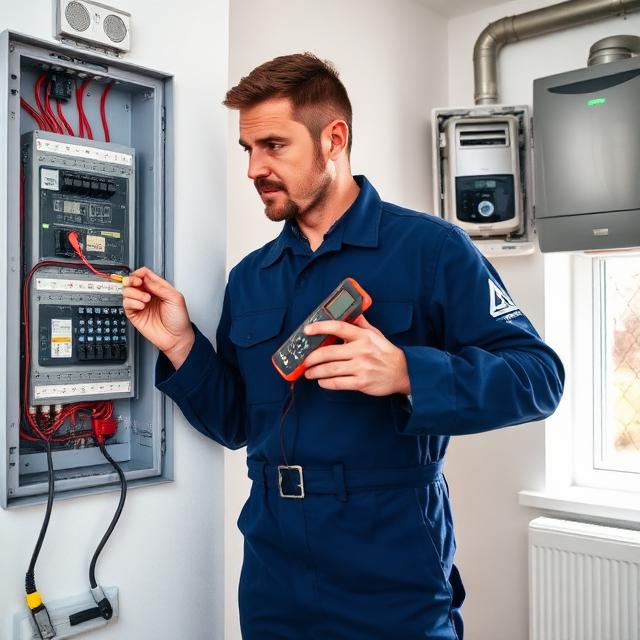
An Electrical Installation Condition Report is produced following an inspection and testing of a property's fixed electrical installation. The assessment should be completed by a suitably qualified and competent electrical professional.
The purpose of an EICR is to identify electrical defects, deterioration, damage and conditions that may create a risk of electric shock or fire. It focuses on the permanent electrical installation rather than ordinary portable appliances belonging to the tenant.
What does an EICR inspection cover?
- Consumer unit: Inspection of the fuse board, protective devices, circuit breakers and Residual Current Devices.
- Fixed wiring: Testing wiring and circuits for deterioration, overheating, damage or unsafe alterations.
- Sockets and switches: Checking electrical outlets, light switches, fused spurs and other fixed accessories.
- Earthing and bonding: Confirming that protective earthing and bonding arrangements are adequate.
- Electrical circuits: Testing circuit continuity, insulation resistance, polarity and protective-device operation where appropriate.
- Signs of unauthorised work: Looking for unsafe DIY alterations, overloaded circuits or incorrectly installed equipment.
Does an EICR include portable appliances?
An EICR generally covers the fixed electrical installation. It does not replace Portable Appliance Testing (PAT) for plug-in appliances such as kettles, microwaves, washing machines or portable heaters supplied by a landlord.
Landlords who provide electrical appliances should consider a suitable appliance inspection and testing programme alongside the fixed-wiring inspection.
How often is an EICR required?
The inspection frequency depends on the legislation applying in the relevant UK nation, the property type and any earlier date recommended in the report. For many private rented homes, a maximum interval of five years commonly applies.
- Arrange the next inspection by the date stated on the current report.
- Keep a secure copy of the report and associated remedial-work records.
- Provide copies to tenants and relevant authorities within the required timescales.
- Do not assume that every report automatically remains valid for five years; the inspector may recommend an earlier inspection.
What is a CP12 gas safety certificate?
The term CP12 is still widely used, although the current document is normally called a Landlord Gas Safety Record. It records the results of safety checks carried out on relevant gas appliances, fittings and flues provided for tenants.
The gas safety check must be completed by an appropriately qualified engineer who is registered with the Gas Safe Register for the type of work being undertaken.
What does a landlord gas safety check cover?
- Gas appliances: Boilers, gas fires, gas hobs and other landlord-provided appliances are checked for safe operation.
- Operating pressure: The engineer checks whether appliances are operating at the correct pressure or heat input.
- Flues and chimneys: Flue systems are checked to ensure combustion gases can discharge safely.
- Ventilation: Required ventilation openings are inspected for suitability and obstruction.
- Safety devices: Appliance safety controls are checked for correct operation.
- Signs of unsafe operation: The engineer looks for gas leaks, poor combustion and possible carbon-monoxide risks.
How often is a CP12 required?
A landlord gas safety check is normally required every 12 months. Landlords should arrange the inspection before the existing record expires and allow sufficient time to organise tenant access or complete necessary repairs.
A valid record should normally be provided to existing tenants within the applicable timescale and to new tenants before they occupy the property.
EICR vs CP12: key differences
| Requirement | EICR | CP12 / Gas Safety Record |
|---|---|---|
| System inspected | Fixed electrical installation | Relevant gas appliances, fittings and flues |
| Examples | Consumer unit, wiring, sockets, switches and earthing | Boilers, gas fires, gas hobs and flues |
| Professional required | Suitably qualified and competent electrical inspector | Gas Safe registered engineer qualified for the work |
| Typical renewal period | Often up to five years, or sooner if the report requires it | Normally every 12 months |
| Main purpose | Identify electrical defects and safety risks | Confirm the safe operation of relevant gas installations |
| Possible follow-up | Electrical remedial work and written confirmation | Repair, isolation or disconnection of unsafe gas equipment |
Understanding EICR classification codes
An EICR will normally state whether the installation is Satisfactory or Unsatisfactory. Electrical defects are recorded using recognised classification codes.
C1 – Danger present
A C1 observation means an immediate danger is present and urgent action is required. The electrical professional may take steps to make the danger safe before leaving the property.
C2 – Potentially dangerous
A C2 indicates a condition that could become dangerous, particularly if another fault develops. Remedial work should be organised urgently.
C3 – Improvement recommended
A C3 means an improvement is recommended, but the observation does not normally make the overall report unsatisfactory by itself.
FI – Further investigation required
FI means the inspector could not fully determine whether a condition is safe and further investigation is required without unnecessary delay.
Where an EICR records C1, C2 or FI observations, landlords should obtain clear written advice regarding the required remedial work and the deadline that applies.
Understanding gas safety classifications
A Gas Safe registered engineer may use recognised classifications when an appliance or installation is unsafe.
Immediately Dangerous
An Immediately Dangerous situation presents an immediate danger to life or property. The engineer will explain the risk and take appropriate action in accordance with gas-safety procedures.
At Risk
An At Risk installation has one or more recognised faults that could become dangerous. The engineer may recommend that the appliance is turned off until the defect is corrected.
Not to Current Standards
This means the installation does not meet a relevant current standard, although it may not present an immediate danger. The engineer should explain the issue and advise whether an upgrade is recommended.
What happens when a property fails an inspection?
A failed or unsatisfactory inspection should never be ignored. The landlord should review the report, arrange the necessary work and retain evidence that the defects have been corrected.
- Read the complete report and identify all urgent observations.
- Ask the inspecting professional to explain any unfamiliar codes or terminology.
- Arrange remedial work with an appropriately qualified professional.
- Complete the work within the legally required or recommended deadline.
- Obtain written confirmation, invoices and any required follow-up certificate.
- Provide relevant documentation to the tenant where required.
- Store the records securely for future inspections or compliance checks.
Common mistakes landlords should avoid
- Assuming an EICR and a gas safety record cover the same systems.
- Waiting until the final day before a certificate expires to arrange an inspection.
- Using a contractor who is not appropriately qualified for the inspection.
- Failing to give the tenant appropriate notice before accessing the property.
- Ignoring C1, C2, FI or gas-safety warning classifications.
- Losing inspection reports, repair invoices or proof that documents were sent to tenants.
- Assuming a new tenancy automatically changes the certificate renewal date.
- Confusing an EICR with PAT testing or ordinary appliance servicing.
Landlord safety checklist for 2026
- Check expiry dates: Review all electrical and gas safety documents regularly.
- Set reminders: Create calendar reminders at least 60 days before each inspection is due.
- Confirm qualifications: Verify that the selected professional is qualified for the specific inspection.
- Arrange tenant access: Communicate clearly with tenants and provide appropriate notice.
- Keep digital records: Store certificates, invoices, photographs and remedial-work documents securely.
- Send certificates promptly: Keep evidence showing when copies were supplied to tenants.
- Act on defects: Do not delay required electrical or gas-safety repairs.
- Review supplied appliances: Consider PAT testing and regular appliance maintenance where relevant.
- Install suitable alarms: Check current smoke-alarm and carbon-monoxide alarm requirements for the property location.
- Review between tenancies: Inspect the property for visible damage, unauthorised alterations or newly developed safety concerns.
Documents landlords should keep
Maintaining a clear property compliance file can make inspections, tenant communication and local-authority enquiries much easier.
- Current and previous EICR reports
- Current and previous landlord gas safety records
- Electrical and gas remedial-work invoices
- Written confirmation that defects have been corrected
- Boiler service and maintenance records
- PAT testing records where applicable
- Smoke-alarm and carbon-monoxide alarm records
- Evidence that certificates were supplied to tenants
- Tenant access communications and appointment records
- Photographs showing completed safety work where useful
Frequently asked questions
Is an EICR the same as a CP12?
No. An EICR covers the property's fixed electrical installation. A CP12 or Landlord Gas Safety Record covers relevant gas appliances, fittings and flues.
Do landlords usually need both certificates?
A rented property with a fixed electrical installation and landlord-provided gas equipment may require both forms of inspection. The exact obligations depend on the property, its location and the equipment provided.
Does a boiler service replace a CP12?
Not automatically. A boiler service is a maintenance procedure, while a landlord gas safety check addresses specific legal safety requirements. Ask the Gas Safe registered engineer exactly what documentation is included in the appointment.
Does PAT testing replace an EICR?
No. PAT testing focuses on portable electrical appliances, whereas an EICR assesses the fixed electrical installation.
Can the same engineer issue both documents?
Only when the individual holds the appropriate qualifications and registrations for both electrical inspection and gas-safety work. Many professionals specialise in one discipline.
What should I do when a tenant refuses access?
Keep written records of your attempts to arrange access, communicate clearly and follow the appropriate tenancy and legal process. Do not enter the property without permission or another lawful basis.
Final landlord compliance summary
An EICR and a CP12 are not interchangeable. The EICR evaluates the fixed electrical installation, while the landlord gas safety record covers relevant gas appliances, fittings and flues.
The most effective approach is to maintain an organised compliance calendar, appoint suitably qualified professionals, act quickly when defects are identified and keep clear evidence that certificates and safety information have been provided to tenants.
Need help arranging a property safety inspection?
Emergency Angel can help you request support for electrical, heating, plumbing and property-maintenance requirements. Provide your service type, telephone number and postcode to check engineer availability.
This article provides general information and is not legal advice. Regulations, guidance and enforcement requirements may change and may differ across the UK. Landlords should verify current requirements with the relevant authority and use appropriately qualified professionals.