
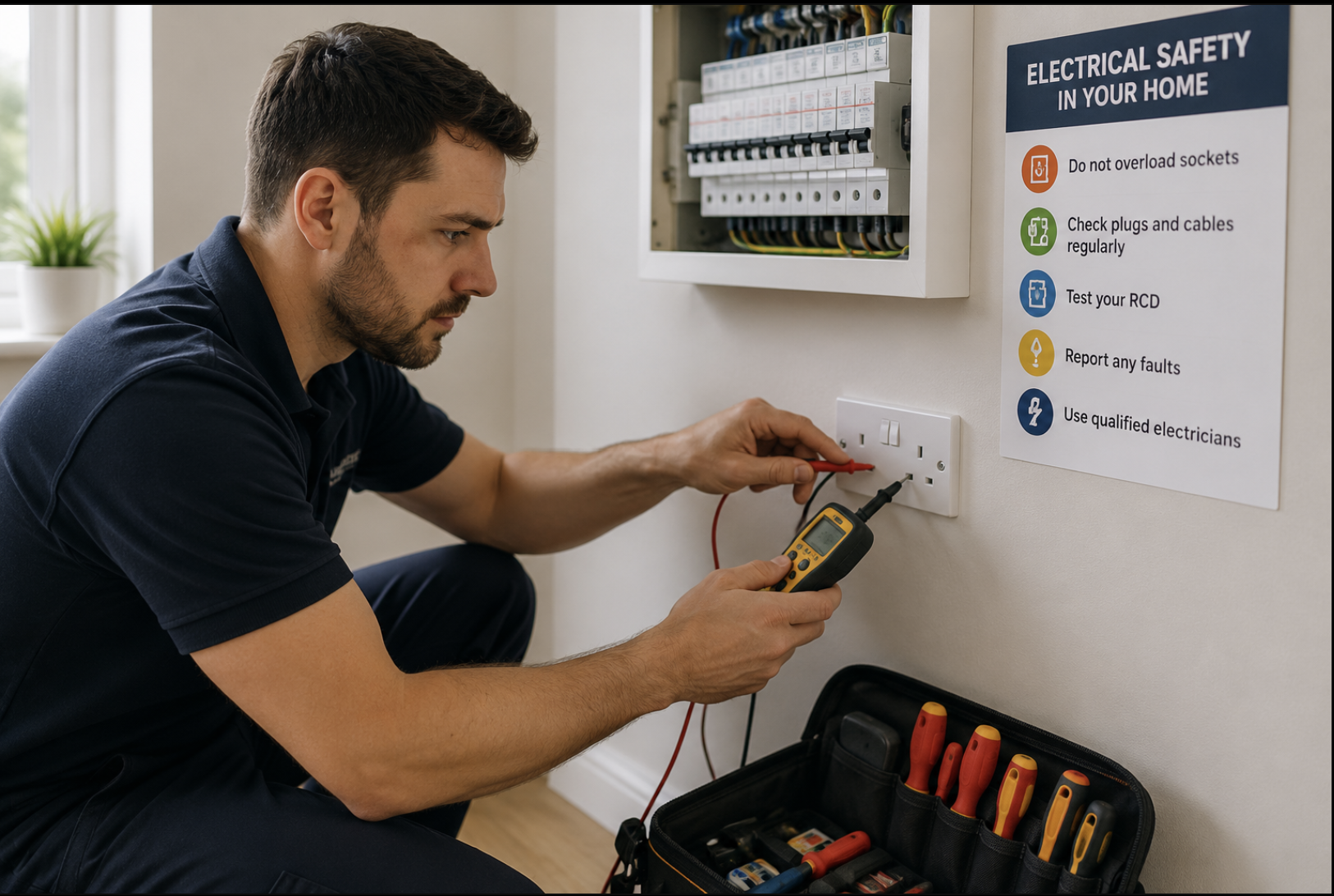
How to Prevent Electrical Faults in Your Home
Electrical faults can often be prevented with regular maintenance, safe electrical habits, and recognising early warning signs before they develop into serious problems. From overloaded sockets to ageing wiring, many electrical issues begin as small defects that worsen over time if left unchecked. By understanding the most common causes of electrical faults and taking simple preventative measures, UK homeowners can improve electrical safety, reduce the risk of electrical fires, and avoid costly emergency repairs. This guide explains practical ways to keep your home's electrical system safe and when it's important to contact a qualified electrician.
Understand the Common Causes of Electrical Faults
Preventing electrical faults begins with understanding why they occur. Ageing electrical installations, damaged wiring, overloaded circuits, faulty appliances, loose electrical connections, moisture entering electrical equipment, and poor-quality DIY electrical work are among the leading causes of household electrical problems. Identifying these risks early makes it much easier to prevent dangerous situations from developing.
Avoid Overloading Sockets and Extension Leads
One of the simplest ways to prevent electrical faults is by using sockets safely. Plugging several high-powered appliances into one extension lead can overload the circuit and generate excessive heat. Appliances such as kettles, tumble dryers, washing machines, portable heaters, and microwaves should ideally be connected directly to wall sockets rather than sharing extension leads. Using the correct extension lead for the electrical load also helps reduce unnecessary strain on your home's electrical system.
Inspect Plugs, Cables, and Sockets Regularly
Visible damage is often the first sign of an electrical problem. Check power cables, plugs, sockets, and extension leads for frayed insulation, exposed wires, burn marks, cracked casings, or loose fittings. Damaged electrical accessories should never be used, as they can increase the risk of electric shock, overheating, and electrical fires. Replacing worn components promptly helps maintain a safer home.
Keep Your Consumer Unit Up to Date
Your consumer unit plays a vital role in protecting your property by disconnecting the electricity supply when dangerous faults occur. Older fuse boxes may not provide the same level of protection as modern consumer units fitted with RCDs or RCBOs. If your consumer unit frequently trips, appears outdated, or has not been inspected for many years, arranging a professional assessment can improve both safety and reliability.
Test Your RCD Protection
Residual Current Devices (RCDs) are designed to reduce the risk of electric shock by cutting off the electricity supply when a fault is detected. Most RCDs include a built-in test button that should be operated periodically to confirm the device is functioning correctly. If the RCD fails to trip during testing or cannot be reset afterwards, contact a qualified electrician as soon as possible.
Use Electrical Appliances Safely
Using appliances according to the manufacturer's instructions helps prevent unnecessary wear and electrical faults. Avoid using damaged appliances, unplug equipment that will not be used for extended periods, and ensure electrical devices have adequate ventilation to prevent overheating. Keeping appliances clean and well maintained can also improve their lifespan and performance.
Protect Outdoor Electrical Installations
Outdoor electrical equipment is exposed to rain, frost, and changing weather conditions throughout the year. Ensure external sockets, garden lighting, and outdoor electrical accessories are designed for external use and remain properly sealed against moisture. Never use indoor extension leads outdoors, particularly during wet weather, as this can significantly increase the risk of electric shock.
Carry Out Regular Electrical Maintenance
Routine maintenance can help identify minor electrical issues before they become major faults. Periodically check switches, sockets, lighting, and visible wiring for signs of wear or damage. Scheduling a professional electrical inspection every few years provides additional peace of mind by identifying hidden defects that may not be visible during everyday use.
Know the Early Warning Signs of Electrical Faults
Many electrical faults produce warning signs before they become dangerous. Flickering lights, repeatedly tripping circuit breakers, buzzing sounds from sockets, burning smells, sparking switches, warm plug sockets, or frequent power interruptions should never be ignored. Acting quickly when these symptoms appear can prevent more serious electrical failures and reduce the likelihood of costly repairs.
When Should You Contact a Qualified Electrician?
Some electrical issues should only be investigated by a qualified electrician. If you notice smoke, burning smells, exposed wiring, electrical shocks, damaged consumer units, water entering electrical equipment, or persistent circuit breaker trips, professional assistance should be sought immediately. Attempting repairs on fixed electrical installations without the necessary qualifications can be dangerous and may place your property at greater risk.
Conclusion
Preventing electrical faults is one of the most effective ways to improve the safety of your home and avoid unexpected repair costs. By practising safe electrical habits, avoiding overloaded circuits, inspecting electrical accessories regularly, maintaining your consumer unit, and recognising early warning signs, homeowners can significantly reduce the risk of electrical problems. If you have any concerns about your home's electrical system or suspect a developing fault, contacting a qualified electrician promptly is always the safest course of action.