
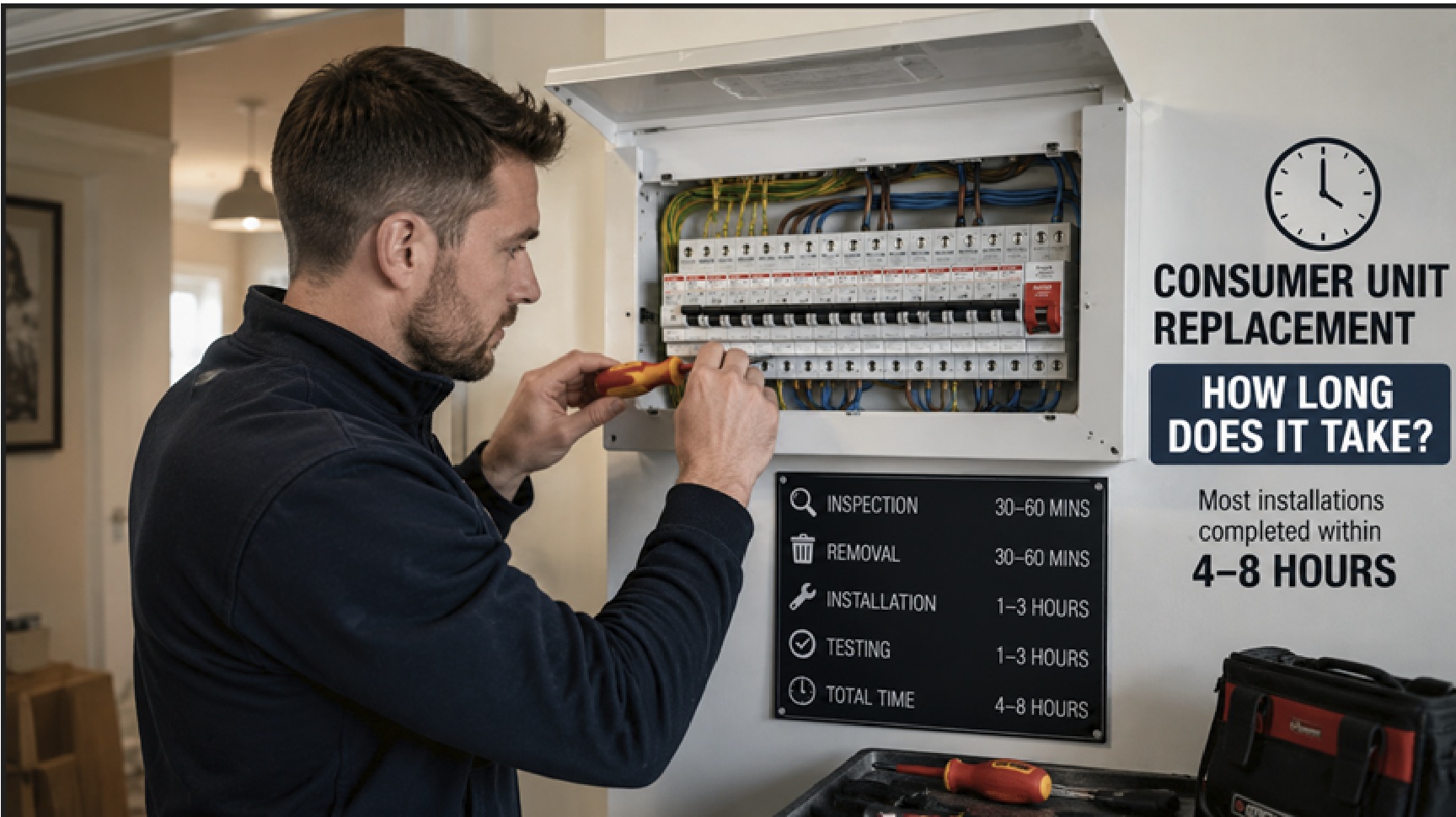
How Long Does a Consumer Unit Replacement Take?
Discovering that your fuse box or consumer unit needs replacing can be stressful, particularly if you have suddenly lost power or an electrician has informed you that your installation may be unsafe. One of the first questions most homeowners ask is how long the replacement process will actually take.
In most UK homes, a consumer unit replacement can be completed within a single day. However, the exact timescale depends on the age of the property, the condition of the existing wiring and whether additional electrical faults are uncovered during the installation.
If your consumer unit has failed unexpectedly, is producing burning smells or is repeatedly tripping, an emergency electrician may recommend immediate replacement to restore power safely and reduce potential fire risks.
How Long Does Consumer Unit Replacement Usually Take?
For the majority of domestic properties in the UK, replacing a consumer unit generally takes between four and eight hours.
Simple installations with modern wiring may be completed in around half a day, while older homes requiring additional repairs may take longer.
During this period, your home's electrical supply will usually need to be isolated, meaning you should prepare for several hours without electricity.
Initial Inspection and Safety Checks
Before replacing the consumer unit, the electrician will carry out preliminary inspections of the existing electrical installation.
This includes checking:
• The condition of the existing wiring
• Earthing and bonding arrangements
• Circuit identification and labelling
• Signs of overheating or previous damage
These inspections are essential because installing a new consumer unit onto an unsafe electrical system could create further problems.
Removal of the Existing Consumer Unit
Once the electrical supply has been safely isolated, the old fuse box can be removed.
Older properties may take longer during this stage due to outdated wiring systems, poor labelling or previous DIY electrical work.
If faults are discovered during removal, additional repair work may be required before the new unit can be installed.
Installation of the New Consumer Unit
The new consumer unit is then mounted and each electrical circuit is individually connected.
Modern consumer units provide significantly improved protection compared to older fuse boards and typically include:
• Circuit breakers (MCBs)
• Residual Current Devices (RCDs)
• RCBO protection
• Surge protection devices
These safety features help protect against electrical fires, electric shock and dangerous electrical faults.
Testing and Certification
Testing is one of the most important parts of the replacement process and can often take several hours.
Extensive electrical testing is required to ensure that:
• Circuits are operating correctly
• Protective devices function properly
• Earthing arrangements are satisfactory
• No hidden electrical faults are present
Following successful testing, the electrician can issue the relevant certification for the installation.
Why Might Replacement Take Longer?
Certain factors can increase the overall installation time.
These include:
• Older electrical installations
• Damaged or deteriorated wiring
• Inadequate earthing or bonding
• Additional circuits requiring repairs
• Water damage affecting electrical components
It is not uncommon for hidden faults to become apparent only after work has commenced.
Emergency Consumer Unit Replacement
In some situations, consumer unit replacement becomes an emergency rather than planned maintenance.
You should contact an emergency electrician immediately if you notice:
• Burning smells coming from the fuse box
• Smoke or signs of overheating
• Frequent circuit breaker trips
• Buzzing or crackling noises
• Complete loss of power due to consumer unit failure
These symptoms may indicate a serious electrical fault that requires urgent professional attention.
Will I Be Without Power During Replacement?
Yes. During the replacement process, the electrical supply to the property will normally be switched off.
Depending on the complexity of the installation, homeowners should prepare for between four and eight hours without electricity.
This may affect:
• Lighting
• Heating systems
• Internet services
• Charging devices
• Kitchen appliances