
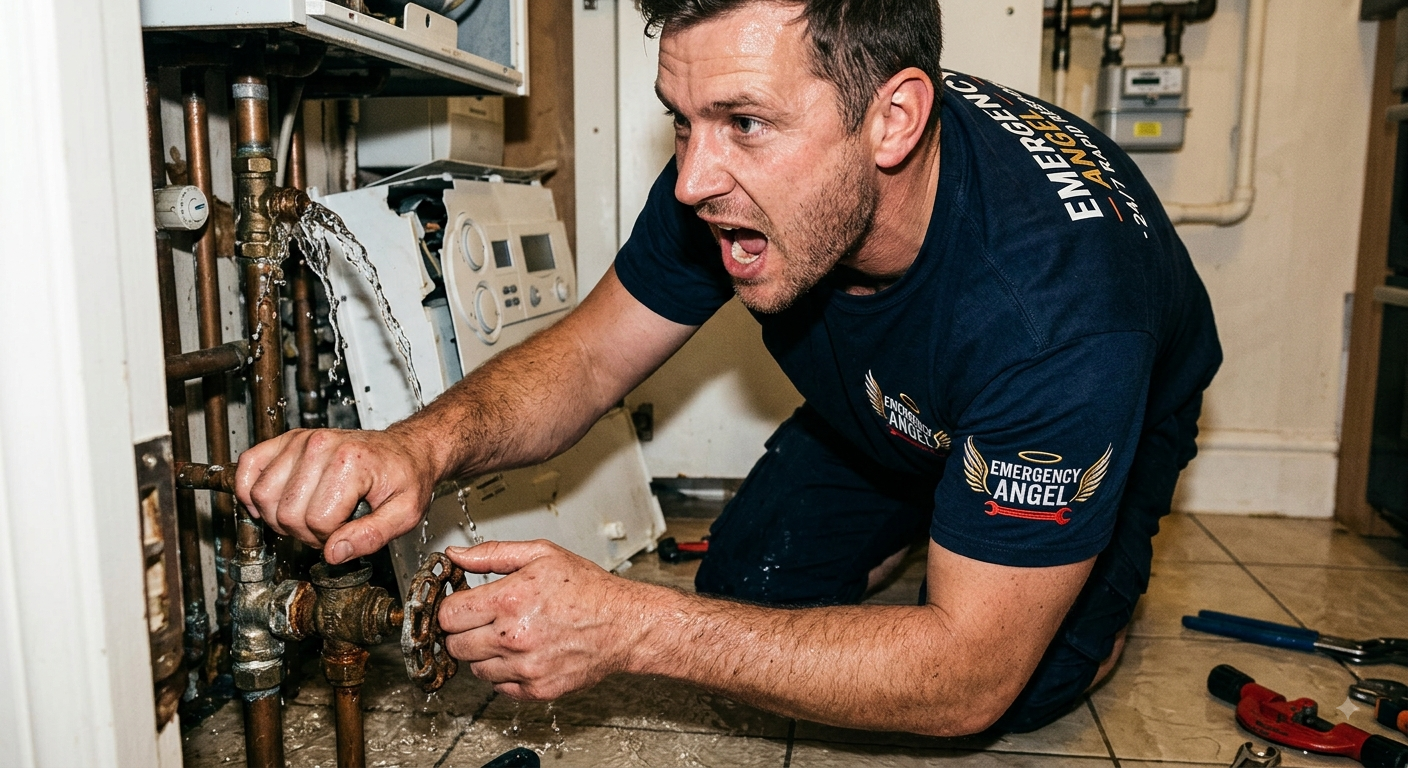
24 Hour Emergency Engineers: How Rapid Response Services Work
It’s 2:17am.
Your boiler has stopped working.
There’s water creeping across the kitchen floor.
The lights have started flickering.
Your front door has decided it no longer recognises your key.
And your first thought is probably:
“Brilliant. Exactly what I needed.”
Domestic emergencies have impeccable timing. They never seem to happen conveniently at 2pm on a Tuesday while you're sitting at your desk with a cup of tea and absolutely nothing else to do.
No. They wait.
Friday night.
Sunday morning.
Christmas Eve.
That wonderfully inconvenient moment when you've just got into bed.
When something genuinely urgent goes wrong, the problem isn't just the fault itself. You also have to work out who to call, whether they are actually available, how quickly they can arrive, whether they are qualified to deal with the problem and, perhaps most importantly, how much the whole thing is going to cost.
That is where a 24-hour emergency engineering service comes in.
Emergency Angel provides access to local emergency professionals across plumbing, electrical, heating, locksmith, tyre and vehicle recovery services, with support available around the clock. The service highlights rapid response, upfront pricing, trusted local trades and no hidden costs. Its website currently advertises an average response time of around 60 minutes, although actual arrival times naturally depend on location, traffic, engineer availability and the nature of the emergency. :contentReference[oaicite:0]{index=0}
But what actually happens after you make that emergency call?
How does a rapid-response service turn a panicked phone call into a professional at your door?
And how do you know whether the problem really needs an emergency engineer?
Let’s get into it.
What Is a 24-Hour Emergency Engineer?
A 24-hour emergency engineer is a professional available to respond to urgent problems outside normal working hours.
That might mean a plumber dealing with a burst pipe.
An electrician investigating dangerous electrical faults.
A heating engineer dealing with a boiler breakdown.
A locksmith helping after a lock failure or lockout.
A mobile tyre specialist dealing with a puncture or damaged tyre.
Or a recovery professional helping when a vehicle has broken down and simply refuses to participate in your plans for the day.
The important word here is emergency.
Emergency engineers are not necessarily there to renovate your bathroom, install a new kitchen or replace every radiator in the house because you've suddenly decided the old ones are “a bit dated”.
Their job is to respond when something has gone wrong and waiting could make the situation worse.
Think of them as the first responders of the trades.
Not firefighters.
Not paramedics.
But the people you want when your home, heating, electrics, plumbing, locks or vehicle have decided to have a spectacularly bad day.
Why Do Emergencies Need a Different Kind of Service?
A normal repair and an emergency repair can involve exactly the same piece of equipment, but the circumstances are completely different.
If your tap is dripping once every three seconds, you might happily arrange an appointment for later in the week.
If the same tap has suddenly become a small indoor fountain, waiting until Thursday isn't such a brilliant plan.
Likewise, a boiler that needs a routine service can be booked in advance.
A boiler that has stopped heating your home during freezing weather is another matter.
The difference is usually urgency, risk and the potential for damage.
A minor issue can remain minor.
An uncontrolled leak can become structural damage.
A faulty electrical connection can become a fire hazard.
A failed lock can leave you unable to secure your property.
A vehicle breakdown can leave you stranded in an unsafe location.
That is why emergency services are designed around speed and availability rather than the traditional “we can fit you in next Tuesday” model.
The Rapid Response Process: What Happens After You Call?
There is nothing magical about emergency engineering.
There is, however, a carefully organised process behind it.
The basic journey looks something like this:
Emergency reported → Situation assessed → Appropriate specialist identified → Engineer availability checked → Engineer dispatched → Arrival → Diagnosis → Make-safe or repair → Follow-up where required.
It sounds straightforward.
And it should.
When your ceiling is dripping, you don't want to participate in a complicated administrative adventure.
You want someone to understand what is happening and get the right help moving.
Step One: Tell Someone What Has Gone Wrong
The first step is surprisingly simple.
You explain the problem.
And don't worry if you don't know what the problem is called.
You don't need to sound like an engineer.
If your kitchen is flooding, say:
“There is water coming through the ceiling.”
If the electrics smell like burning plastic, say exactly that.
If your boiler has stopped working and the house is freezing, explain what the boiler is doing.
If you're locked out, say you're locked out.
You don't need to diagnose the internal locking mechanism while standing outside in your slippers.
The important information is what is happening, where it is happening and whether there is an immediate danger.
Step Two: Emergency Triage
This is where the process becomes more interesting.
Before someone sends an engineer, the situation needs to be understood.
This is known as triage.
In plain English:
“How bad is it, and who needs to deal with it?”
A good emergency service needs to establish the nature of the problem so the appropriate specialist can be sent.
For a plumbing emergency, that could mean determining whether you're dealing with a dripping radiator valve, a blocked toilet, a serious leak or a burst pipe.
For an electrical emergency, the questions might involve power loss, burning smells, sparks, exposed wiring or repeated circuit trips.
For heating, the issue could be a complete boiler failure, loss of hot water, unusual noises or another fault requiring a qualified heating professional.
The more useful information you can provide, the easier it is to understand the situation.
That doesn't mean you should start dismantling things.
Quite the opposite.
Describe. Don't experiment.
Step Three: Finding the Right Specialist
This is one of the most important parts of emergency response.
You don't want the nearest available person.
You want the nearest suitable person.
There is a difference.
A locksmith isn't the person you want investigating a boiler.
A heating engineer shouldn't be improvising an electrical repair.
A tyre specialist isn't going to solve your burst kitchen pipe.
Emergency Angel's service covers several categories of emergency work, including plumbing, electrics, heating, locksmith services, mobile tyre assistance and vehicle recovery. :contentReference[oaicite:1]{index=1}
A network approach can make this process more flexible because different specialists may be available in different areas and at different times.
The aim is to connect the emergency with the appropriate professional rather than leaving the customer to make ten phone calls while standing beside the problem.
Step Four: The Engineer Gets Moving
Once the appropriate professional has been identified and availability confirmed, the next stage is the bit everyone cares about:
“How long until they get here?”
Emergency Angel advertises an average response time of around 60 minutes. However, an average is not a guarantee for every individual call. Your actual arrival time can be influenced by your postcode, traffic, weather, demand, engineer availability and the complexity of the emergency. :contentReference[oaicite:2]{index=2}
That distinction matters.
A responsible emergency service should provide a realistic expectation rather than promising that someone will teleport through your front door in exactly 43 minutes.
Although, frankly, we'd all love the teleporting engineer option.
Why Location Matters
Emergency response is partly a geography problem.
If an engineer is five miles away, they may be able to reach you considerably faster than someone who is fifty miles away.
That is one reason local professionals are so important.
Emergency Angel describes its model as a network of local tradespeople who can respond to customers in their area. :contentReference[oaicite:3]{index=3}
The wider network can help coordinate availability while the engineer on the road provides the actual hands-on service.
It is essentially the best of both worlds:
Wider coordination. Local expertise.
What Happens When the Engineer Arrives?
This is where the panic should start turning into something much more useful:
A plan.
The engineer will assess the situation and identify the immediate problem.
Sometimes the solution is obvious.
Sometimes it isn't.
A leak may be coming from somewhere completely different from where the water appears.
An electrical fault might be hidden behind a socket, appliance or section of wiring.
A boiler fault may involve several possible causes.
A lock that appears to be jammed could have an internal failure that isn't visible from outside.
Professional diagnosis matters because emergency repair is not simply about doing something quickly.
It is about doing the right thing quickly.
Make Safe First, Repair Second
This is an important concept in emergency engineering.
Sometimes the immediate objective isn't to complete a perfect long-term repair in one visit.
The immediate objective is to make the situation safe.
For example, if a damaged electrical circuit presents a danger, the engineer may need to isolate the affected circuit.
If water is escaping uncontrollably, the priority is to stop or contain the water.
If a heating system has developed a dangerous fault, the system may need to be safely shut down before further work is carried out.
If a lock has failed, the priority may be restoring secure access before arranging any additional work.
This is why emergency engineering is different from ordinary maintenance.
The engineer is dealing with consequences that are happening now.
What Counts as a Plumbing Emergency?
Plumbing problems have a remarkable talent for becoming much more expensive when ignored.
Water doesn't politely wait in one place.
It travels.
Under floors.
Behind walls.
Into ceilings.
Under cupboards.
And occasionally into the one room where you absolutely did not want it.
Common plumbing emergencies include:
- Burst pipes
- Major water leaks
- Uncontrolled leaks from tanks or plumbing systems
- Serious drain blockages causing flooding
- Leaks threatening electrical equipment
- Major toilet or bathroom failures
- Water escaping from heating or plumbing equipment
Emergency Angel specifically lists leaks, burst pipes and plumbing faults among its emergency plumbing services. :contentReference[oaicite:4]{index=4}
Telltale Signs Your Plumbing Problem Can't Wait
There are several clues that your plumbing issue has moved from “annoying” to “urgent”.
Rapidly spreading water is an obvious one.
Another is a leak that you cannot isolate.
If water is reaching electrical sockets, appliances, lighting or the consumer unit, the situation becomes more serious.
Water appearing through a ceiling is another warning sign.
And if a pipe has actually burst, waiting around to see whether it sorts itself out is unlikely to produce the happy ending you're hoping for.
Pipes are many things.
Self-healing is generally not one of them.
What Should You Do While Waiting for a Plumber?
Your first priority is safety.
If it is safe to do so, shut off the water supply using the stopcock.
The stopcock is commonly located under a kitchen sink, although its exact location varies between properties.
If you know where yours is before an emergency happens, congratulations.
You have just done something future-you will be extremely grateful for.
If water has reached electrical equipment, do not touch electrical appliances or switches in a wet area.
If it is safe to isolate the electrical supply, do so according to your property's normal safety arrangements.
Move valuables and furniture away from water where you can do so safely.
Don't climb onto unstable surfaces.
Don't start cutting holes in your ceiling because a YouTube video said it was “super easy”.
And don't start dismantling the plumbing unless you genuinely know what you're doing.
The goal is to contain the situation, not accidentally upgrade a leak into a flood.
What Counts as an Electrical Emergency?
Electricity deserves a little more respect than most household problems.
A dripping tap is irritating.
A burning electrical socket can be dangerous.
Warning signs include:
- Burning smells
- Smoke
- Sparks
- Buzzing or crackling
- Scorch marks
- Hot sockets or electrical equipment
- Repeated circuit breaker trips
- Exposed or damaged wiring
- Water entering electrical equipment or installations
Emergency Angel's electrical guidance highlights burning smells, overheating and other warning signs as reasons for urgent professional attention. :contentReference[oaicite:5]{index=5}
If you see smoke or suspect an electrical fire, don't try to investigate the source with your hands.
Get people away from danger and contact the appropriate emergency services where necessary.
The Burning Smell Test
Here's one household rule worth remembering:
If an electrical socket smells like burning plastic, don't ignore it.
A strange acrid or fishy smell can indicate overheating or electrical arcing.
You might also notice discolouration around a socket or plug.
Perhaps the socket feels unusually warm.
Maybe there is buzzing.
Maybe the lights are flickering.
Maybe the circuit breaker hasn't even tripped.
None of those things are a good excuse to say:
“I'll have a look at it tomorrow.”
Electrical faults can develop without giving you a dramatic warning first.
If you suspect a serious electrical problem, professional assessment is the sensible option.
What Does an Emergency Electrician Actually Do?
An emergency electrician may begin by identifying and isolating the source of the fault.
The exact work depends on what has happened.
They might investigate a faulty socket, circuit, consumer unit, damaged wiring, power failure or other electrical problem.
The first priority is safety.
Only after the danger has been controlled can the engineer determine what permanent repair is appropriate.
That may mean replacing a damaged component, repairing wiring, addressing a connection fault or carrying out other remedial work.
For certain types of electrical work, appropriate qualifications, registration and compliance requirements matter. You should always use a suitably qualified professional for electrical work rather than a general handyman who happens to own a screwdriver.
Heating Emergencies: When “It's Just Cold” Isn't Just Cold
British homes and boilers have a complicated relationship.
We rely on them.
We complain about them.
We ignore them until they stop working.
Then suddenly we are standing in front of the boiler pressing buttons with the determination of someone trying to launch a spaceship.
Heating emergencies can include:
- Complete boiler failure
- Loss of heating
- Loss of hot water
- Serious leaks from heating equipment
- Repeated boiler shutdowns
- Unusual noises or smells
- Suspected gas-related faults
If the problem involves gas, you need the appropriate qualified professional. Gas work in Great Britain must be carried out by an engineer who is appropriately registered with the Gas Safe Register for the relevant work.
Emergency Angel's current service information distinguishes emergency gas and heating expertise and highlights Gas Safe credentials among its professional standards. :contentReference[oaicite:6]{index=6}
Gas Emergencies Are Different
Gas is not a “have a quick look and see what happens” situation.
If you smell gas or suspect a gas leak, follow official emergency gas safety guidance and avoid creating sparks or flames.
Do not treat a suspected gas leak like a normal boiler fault.
And definitely don't decide that this is the perfect moment to practise your DIY skills.
Some emergencies require the property to be evacuated and the appropriate emergency gas service contacted.
The correct response depends on the circumstances.
When in doubt about a potentially dangerous gas situation, prioritise people over property.
Emergency Locksmith Services
Few things make you feel quite as powerless as standing outside your own home while your keys sit approximately two metres away on the other side of the door.
Lock problems can happen for several reasons.
You might lose your keys.
The lock might fail.
A key might snap.
The door might jam.
You might simply discover that modern technology has once again defeated you.
Emergency locksmiths can help with urgent lockouts, failed locks and access problems.
Emergency Angel lists locksmith emergencies as one of its rapid-response service categories. :contentReference[oaicite:7]{index=7}
The priority is usually to restore safe access while maintaining the security of the property.
Why a Lockout Can Become a Genuine Emergency
Being locked out isn't always just inconvenient.
Imagine leaving a cooker on.
Having a child or vulnerable person inside.
Being locked outside during severe weather.
Discovering that you cannot secure your property after a lock failure.
Those situations can turn an ordinary lockout into something requiring urgent assistance.
And no, repeatedly kicking the door isn't considered a sophisticated locksmith technique.
Emergency Tyre Assistance
Not all emergencies happen at home.
Sometimes the house is perfectly fine.
Your car, however, has decided otherwise.
A flat tyre or serious tyre damage can leave you stranded, particularly if it happens at night, in poor weather or somewhere unfamiliar.
Emergency Angel lists mobile tyre assistance among its emergency services. :contentReference[oaicite:8]{index=8}
The advantage of a mobile response is obvious:
You don't necessarily have to get yourself and your damaged vehicle to the tyre professional.
The professional comes to you where practical and safe.
Vehicle Breakdown and Recovery
Then there are the days when the vehicle doesn't merely have a flat tyre.
It has completely given up.
Engine trouble.
Electrical failure.
Mechanical breakdown.
A vehicle that won't start.
A vehicle that won't move.
Or a vehicle that has chosen the hard shoulder as its new permanent address.
Emergency vehicle recovery exists for precisely these situations.
Emergency Angel includes motor recovery and breakdown support within its emergency service offering. :contentReference[oaicite:9]{index=9}
As with any roadside emergency, safety comes first. If your vehicle has broken down in a dangerous location, follow the relevant road safety guidance and contact emergency services if there is an immediate danger to life.
Why Rapid Response Matters
Speed matters because emergencies rarely improve while you're waiting.
A leak can spread.
A heating failure can become increasingly uncomfortable.
An unsecured property can remain vulnerable.
A roadside breakdown can leave you exposed to traffic or weather.
An electrical fault can continue to generate heat.
The purpose of rapid response is not to create an artificial sense of drama.
The drama is usually already there.
The purpose is to shorten the period between “something has gone wrong” and “someone qualified is dealing with it.”
The Golden Rule of Emergency Repairs
Here is the simplest way to think about emergency engineering:
Stop the problem getting worse.
That might mean isolating water.
Isolating electricity.
Shutting down a heating appliance.
Securing a property.
Getting a vehicle into a safer position.
Or simply getting professional help moving quickly.
You don't necessarily need to fix everything yourself.
In fact, trying to fix everything yourself is one of the fastest ways to turn a manageable emergency into a much bigger one.
Why You Shouldn't Always DIY an Emergency
DIY is brilliant when you know what you're doing.
Putting up a shelf?
Fine.
Painting a bedroom?
Go for it.
Replacing a serious electrical fault at 1am because you've watched a 47-second video titled “EASY FIX!!!”?
Absolutely not.
The problem with emergencies is that stress changes how people behave.
You rush.
You improvise.
You grab whatever tool is closest.
You convince yourself that the strange smell is probably nothing.
And then suddenly the problem is considerably less simple than it was ten minutes earlier.
Professional emergency engineers are trained to assess risk before diving into a repair.
That calm approach is part of the service.
What Makes a Good Emergency Engineer?
Technical ability is obviously important.
But emergency work requires more than knowing how a system operates.
A good emergency engineer needs to remain calm under pressure.
They need to communicate clearly.
They need to diagnose efficiently.
They need to understand safety.
They need to carry appropriate tools and equipment.
They need to know when a temporary solution is appropriate and when a permanent repair is required.
And they need to understand that the person standing in front of them may have spent the last hour panicking.
Because to the engineer, it's a Tuesday night call-out.
To the customer, it might feel like the end of civilisation.
A calm professional can make a huge difference.
The Human Side of Emergency Engineering
This part often gets overlooked.
Emergency engineering is not just about pipes, wires, boilers, locks and vehicles.
It is about people.
When your home is flooding, you're not thinking about the technical specification of the stopcock.
You're thinking:
“Is my house going to be okay?”
When your electrics smell like burning, you're thinking about your family.
When your boiler stops during a freezing night, you're thinking about how you're going to get through the night.
When you're locked outside, you're thinking about how long you're going to be standing there.
When your vehicle breaks down, you're thinking about getting somewhere safe.
That's why communication matters.
Emergency Angel describes its values around customer-first communication, dependable service, fair pricing and availability around the clock. :contentReference[oaicite:10]{index=10}
Clear Communication Is Part of the Repair
Imagine two emergency services.
The first says:
“Someone will be there at some point.”
The second says:
“We have your details, we're arranging the appropriate engineer and we'll keep you updated on the expected arrival.”
Which one makes you feel more in control?
Exactly.
Clear communication doesn't stop a pipe bursting.
But it does stop the customer wondering whether anyone has actually heard them.
Why Upfront Pricing Matters
There is another fear that comes with emergency repairs:
“How much is this going to cost?”
It is a completely reasonable question.
Emergency work can involve out-of-hours attendance, travel, specialist equipment, replacement parts and additional labour depending on the problem.
That is why pricing transparency matters.
Emergency Angel states that it provides clear upfront pricing and confirms the quote before work proceeds, with no hidden costs advertised as part of its service proposition. :contentReference[oaicite:11]{index=11}
The important principle for any customer is simple:
Understand what you're agreeing to before work begins.
If additional work becomes necessary, ask what it involves and what it will cost.
Emergency doesn't mean you stop being allowed to ask questions.
Emergency Pricing Doesn't Have to Be Mysterious
There is a common perception that calling someone at 3am means handing them your bank card and hoping for the best.
It shouldn't work like that.
A professional service should be clear about what the call-out involves, what is included, what isn't included and whether parts or additional work may cost extra.
That doesn't mean every emergency has an identical price.
It obviously doesn't.
A leaking tap and a flooded basement are not the same job.
A failed light switch and a damaged consumer unit aren't the same job.
A simple tyre change and a vehicle recovery aren't the same job.
The point is transparency.
You should know what you're paying for.
Why 24/7/365 Availability Matters
Emergencies don't take weekends off.
They don't observe Bank Holidays.
They don't check whether your local tradesperson is currently on holiday.
They certainly don't care that you're already having a bad week.
Emergency Angel advertises emergency support 24 hours a day, 365 days a year. :contentReference[oaicite:12]{index=12}
That around-the-clock availability is the entire point of an emergency service.
Because if the service closes at 5pm, it isn't particularly useful when your boiler dies at 5:03pm.
Or when the pipe bursts at 1:12am.
Or when you lock yourself out at 11:48pm after promising yourself you would “just pop outside for a minute”.
How to Prepare for an Emergency Before It Happens
Here's a slightly annoying truth:
The best time to prepare for an emergency is when nothing is wrong.
When your house is dry.
Your electricity is working.
Your boiler is behaving.
Your keys are in your hand.
Your car is starting.
That's the moment to find out where the stopcock is.
That's the moment to check that your consumer unit is accessible.
That's the moment to save an emergency contact number.
That's the moment to check your boiler details and keep useful paperwork somewhere easy to find.
Because during an emergency, your brain has better things to do than remember where the stopcock is hidden.
Create a Household Emergency Checklist
A simple emergency checklist can include:
- Location of the internal stopcock
- Location of the consumer unit
- Boiler make and model
- Gas emergency information
- Emergency contact numbers
- Home insurance details
- Vehicle breakdown information
- Location of spare keys
- Important medical or accessibility information where appropriate
Keep it somewhere accessible.
Not inside the cupboard that you can only open using the tiny key that is currently missing.
What Information Should You Give the Emergency Service?
The more useful information you can provide, the easier it is to assess the situation.
Start with your location.
Then describe the problem.
Then explain what has happened so far.
For example:
“I'm at [postcode]. There's a burst pipe under the kitchen sink. Water is spreading across the floor. I've turned off the stopcock and the water is still draining from the pipework.”
That's much more useful than:
“Everything is broken.”
Although, to be fair, when your kitchen is flooded at 2am, we completely understand why that might be the first sentence.
Tell Them About Safety Risks
Always mention anything that could affect safety.
For example:
- Children are present.
- Someone in the property is vulnerable.
- Water has reached electrical equipment.
- You smell gas.
- There is smoke.
- The property cannot be secured.
- The vehicle is in a dangerous location.
- You are stranded somewhere exposed.
That information can be crucial when assessing urgency.
What If You Don't Know Which Engineer You Need?
This is more common than you might think.
You don't have to know.
That's part of why a coordinated emergency service exists.
If you're unsure whether your boiler issue is plumbing, heating or gas-related, explain the symptoms.
If you're not sure whether a power problem is an appliance fault or an electrical installation issue, describe what you can see and smell.
If you're unsure whether a lock has failed or you've simply locked yourself out, say so.
The job of the response team is to understand the situation and direct you towards the appropriate professional.
That's considerably better than spending half an hour Googling:
“Is my boiler technically plumbing or heating please help it is cold.”
Emergency Engineering Is About Risk Management
At its heart, emergency engineering is really about managing risk.
The engineer arrives.
They assess.
They identify what could happen next.
They control the immediate hazard.
Then they repair the underlying problem wherever possible.
That might sound less exciting than “hero arrives with toolbox and saves the day”.
But it's actually much more important.
The goal isn't theatrical heroics.
The goal is preventing a bad situation from becoming worse.
The Difference Between Temporary and Permanent Repairs
Sometimes a permanent repair can be completed immediately.
Sometimes it can't.
Parts may need to be ordered.
Additional specialist work may be required.
The system may need a more extensive repair.
Or the safest option may be to isolate the problem until a full solution can be completed.
That doesn't necessarily mean the emergency response has failed.
If the immediate danger has been controlled and your property has been made safe, the emergency engineer has achieved an important part of the job.
A good professional should explain the difference between:
“This is safe for now.”
and
“This is fully repaired.”
Those are not always the same thing.
What Should You Expect From a Professional Emergency Service?
There are several things worth looking for.
Availability: Can you actually contact the service when you need it?
Appropriate expertise: Are you being connected with the right type of engineer?
Communication: Do you understand what is happening?
Pricing: Are costs explained clearly?
Professional standards: Are the relevant qualifications and insurance in place?
Local response: Is there a practical route to getting someone to your location?
Customer care: Are you treated like a person rather than a job number?
These things matter because an emergency is already stressful enough.
You shouldn't have to add “mystery invoice” and “where is the engineer?” to the list.
Why Trusted Local Engineers Matter
Emergency Angel says it is building a network of friendly, reliable local engineers and describes its focus as making emergency repairs fast, fair and stress-free. :contentReference[oaicite:13]{index=13}
Local knowledge can be valuable.
An engineer familiar with the area may understand local roads, common property types and practical access issues.
More importantly, a local professional can be physically close enough to respond without spending half the night travelling.
When you're dealing with a leak, that matters.
When you're locked outside, it matters.
When you're stranded with a damaged tyre, it matters even more.
What “Fast” Really Means
Fast doesn't necessarily mean instant.
There is a difference.
A responsible emergency service has to balance speed with safety.
The nearest engineer may be finishing another job.
Traffic may be terrible.
Weather may cause delays.
A specialist may need to travel further because the problem requires particular expertise.
So the useful definition of fast is:
Getting the right professional moving as quickly as reasonably possible and keeping the customer informed.
That's much more realistic than promising that every engineer will appear within precisely 60 minutes regardless of what is happening on the roads.
The 60-Minute Question
Emergency Angel currently advertises an average response time of 60 minutes. :contentReference[oaicite:14]{index=14}
The word average is doing important work here.
An average is a general performance indicator, not a guarantee that every emergency will receive attendance in exactly one hour.
Your actual response can vary.
If you're in a busy city at 3am, availability may be different from a rural location during a major storm.
Similarly, a dangerous electrical emergency may be prioritised differently from a non-critical convenience issue.
What matters is receiving a realistic expectation and having the situation handled appropriately.
Why Emergency Engineers Need to Stay Calm
Imagine arriving at a house where the customer is panicking.
There is water everywhere.
The ceiling is stained.
The dog is barking.
The children are asking questions.
Someone is holding a mop.
Someone else is holding a bucket.
And everyone is talking at once.
The engineer's response cannot be:
“Oh dear.”
They need to assess the situation.
Calmly.
Methodically.
Professionally.
That's why emergency engineering is partly technical and partly human.
You need someone who knows what to do and knows how to communicate while doing it.
The Emergency Angel Approach
Emergency Angel describes its service around four core ideas: rapid response, clear pricing, local trusted trades and 24/7 availability. :contentReference[oaicite:15]{index=15}
Its wider company messaging also focuses on customer-first communication, dependable service, fair pricing and being available around the clock. :contentReference[oaicite:16]{index=16}
Those principles make sense for emergency work.
Because when something goes wrong, customers don't want complicated.
They want:
“Tell me what's happening.”
“Tell me who is coming.”
“Tell me roughly when they'll arrive.”
“Tell me what it will cost.”
“Please fix the thing.”
Honestly, that's pretty much the dream.
What Emergency Engineers Don't Do
They don't make dangerous situations magically disappear before arriving.
They don't necessarily replace every damaged component immediately.
They shouldn't carry out work outside their qualifications.
And they shouldn't promise something they cannot safely deliver.
Professional emergency engineering involves knowing the limits of the situation.
Sometimes the correct answer is a repair.
Sometimes it is isolation.
Sometimes it is replacement.
Sometimes another specialist is needed.
Knowing which one applies is part of being a professional.
How to Make the Engineer's Job Easier
You can help enormously without touching the problem yourself.
Clear the area.
Put pets somewhere safe.
Move belongings away from the affected area if it is safe.
Have keys or access information ready.
Find relevant appliance details if they're easily available.
Tell the engineer exactly what happened.
And most importantly:
Don't hide the embarrassing bit.
“I tried to fix it and now there are three extra leaks” is useful information.
So is “I reset the boiler eight times”.
So is “I think the burning smell started after I plugged this extension lead in.”
Engineers need the truth, not the polished version.
Things You Should Never Hide From an Engineer
Tell them if:
- You have already attempted a repair.
- You have turned something off.
- You have reset a breaker repeatedly.
- You have used a sealant or temporary repair product.
- You have smelled gas.
- You have seen sparks or smoke.
- Water has reached electrical equipment.
- A previous repair was recently carried out.
- The problem happens intermittently.
These details can help the professional diagnose the fault more safely.
The Biggest Mistake: Waiting for the Problem to Become Obviously Serious
This is one of the most common household mistakes.
People see the warning sign.
Then they negotiate with themselves.
“It's probably fine.”
“I'll check it tomorrow.”
“Maybe it'll stop.”
“It's only a little water.”
“The socket isn't that hot.”
“The boiler has done this before.”
“The lock will probably work if I try it again.”
Sometimes it will.
Sometimes it absolutely won't.
The tricky part is knowing which is which.
When there is a credible risk to safety or significant property damage, getting professional advice early can be far better than waiting for the problem to announce itself with a much larger bill.
Emergency Repairs and Insurance
If an emergency has caused significant property damage, keep records.
Take photographs if it is safe to do so.
Record when you noticed the problem.
Keep invoices and receipts.
Keep details of the engineer's attendance.
Contact your insurer where appropriate.
Don't delay necessary emergency action simply because you're worried about paperwork.
Stopping further damage is usually the priority.
Insurance policies vary, so check your own policy requirements rather than assuming every insurer handles emergency repairs in exactly the same way.
Why Documentation Matters
It can be useful to have a simple record showing:
- When the emergency started
- What you observed
- What immediate action you took
- When you contacted an emergency service
- When the engineer arrived
- What was diagnosed
- What work was completed
- What further work was recommended
It also gives you something useful to refer back to if the problem returns.
The Psychology of a Home Emergency
Here's something engineers understand that homeowners sometimes forget:
When your home breaks, it feels personal.
Your home is supposed to be the place where things work.
The lights turn on.
The heating heats.
The water stays inside the pipes.
The doors lock.
Your car starts.
When one of those systems fails, it disrupts the sense that everything is under control.
That is why a fast, calm professional response can be so reassuring.
The engineer isn't simply repairing a pipe.
They're helping restore normality.
And Sometimes Normality Is the Best Repair of All
You don't need your emergency engineer to become your new best friend.
You don't need a ten-page technical report.
You don't need a dramatic speech.
You need your home back.
Your heating working.
Your electrics safe.
Your door secure.
Your vehicle mobile.
Your floor dry.
And your blood pressure somewhere below the moon.
Frequently Asked Questions About 24-Hour Emergency Engineers
What is a 24-hour emergency engineer?
A 24-hour emergency engineer is a qualified professional who provides urgent repair or make-safe assistance outside normal working hours. Depending on the service, this can include plumbers, electricians, heating engineers, locksmiths, tyre specialists and vehicle recovery professionals.
When should I call an emergency engineer?
You should consider urgent professional assistance when a problem presents a significant safety risk, threatens substantial property damage, prevents you from securing your property or leaves you stranded in an unsafe situation. Examples include serious water leaks, dangerous electrical faults, major heating failures, failed locks and vehicle breakdowns.
How quickly can an emergency engineer arrive?
Arrival times vary according to location, traffic, demand, weather, engineer availability and the nature of the emergency. Emergency Angel currently advertises an average response time of around 60 minutes, but customers should treat this as an average rather than a guarantee for every individual call. :contentReference[oaicite:17]{index=17}
Are emergency engineers available at night?
Yes. Emergency Angel advertises 24-hour emergency support, 365 days a year, including weekends and holidays. :contentReference[oaicite:18]{index=18}
Do I need to know exactly what is wrong before I call?
No. You should describe the symptoms as clearly as possible, but you do not need to diagnose the fault yourself. Explain what happened, where it is happening, what you can see or smell and whether there is an immediate safety concern.
What should I do if I have a burst pipe?
If it is safe, turn off the water supply at the stopcock and keep people away from areas where water may have reached electrical equipment. Move valuables away from the affected area if safe and contact a professional for assistance.
What should I do if an electrical socket smells like burning?
Treat a burning smell, smoke, sparks, scorching or unusual heat as a potentially serious electrical fault. Avoid touching the affected equipment and seek professional electrical assistance. If there is smoke or an active fire, leave the property and contact the emergency services.
What if I smell gas?
Treat suspected gas leaks as a safety emergency. Avoid flames and activities that could create sparks, follow official gas emergency guidance and leave the property if necessary. Gas work should only be carried out by appropriately qualified Gas Safe registered professionals.
Can an emergency engineer provide a temporary repair?
Sometimes. The appropriate response depends on the fault. If a permanent repair cannot safely be completed immediately, the engineer may need to isolate the problem or make the property safe until further work can be arranged. A professional should explain what has been done and whether additional work is required.
Does emergency service mean the repair is guaranteed immediately?
No. Emergency service means urgent assistance is available and the situation can be assessed quickly. The complexity of the repair, availability of parts, safety requirements and need for specialist work can affect how long the complete resolution takes.
Spot the AI: Yes, We Know
Now for the part most corporate blogs would probably prefer to hide.
This article was created with AI assistance.
There.
We said it.
But rather than pretending a mysterious human called “Dave from Content” sat in a dark room writing 7,875 words while drinking seventeen coffees, let's talk about it.
There are some telltale signs that content may have been produced or assisted by AI.
Sign One: Everything Is Very Organised
AI loves structure.
Headings.
Subheadings.
Lists.
Questions.
Answers.
Conclusion.
It is basically the content equivalent of someone alphabetising their spice rack.
Real humans are perfectly capable of being organised, of course.
But when every section flows with suspicious precision, AI may have been involved.
Sign Two: The Dramatic Opening
“It's 2:17am.”
Something has gone wrong.
You hear a noise.
You panic.
Congratulations.
You have encountered one of AI's favourite storytelling techniques.
It is practically contractually obliged to begin emergency articles in the middle of the night.
Sign Three: The Short Sentence Parade
Something happened.
It was bad.
You panicked.
Help was needed.
Then the engineer arrived.
AI loves short dramatic sentences because they make information easy to scan.
They're useful.
They're also a little suspicious when there are approximately 900 of them in a row.
Sign Four: “It's Simple”
AI loves saying something is simple.
“It's simple.”
“Follow these simple steps.”
“Here's the simple answer.”
Meanwhile your boiler is flashing an error code that looks like the launch sequence for a nuclear submarine.
Sometimes things are not simple.
And that's okay.
Sign Five: The Excessive Use of the Em Dash
AI has a slightly unhealthy relationship with the em dash.
It loves one.
Then another.
And another.
Before long, the sentence looks like it has been designed by a railway enthusiast.
Humans use em dashes too, so this isn't scientific proof.
But if you see twenty in one paragraph, start asking questions.
Sign Six: Everything Is “Not Just X, But Y”
AI frequently uses structures such as:
“It's not just a repair. It's peace of mind.”
“It's not just a plumber. It's a first responder.”
“It's not just a boiler. It's your home's heartbeat.”
It's catchy.
It's also one of the easiest patterns to spot once you know what you're looking for.
Sign Seven: The Suspiciously Positive Conclusion
Your kitchen is flooded.
Your boiler is broken.
Your car won't start.
Your front door won't open.
And somehow the article concludes:
“Don't worry. Everything will be okay.”
That's optimism.
Or AI.
Possibly both.
Does AI Mean the Information Is Wrong?
No.
But it does mean readers should apply the same common sense they would use with any online content.
AI can organise information extremely well.
It can also confidently get things wrong.
That's why important technical, safety and regulatory information should be checked against authoritative sources and current professional guidance.
Emergency Angel's own service information and specialist articles provide the context for its particular services, but customers should always follow official emergency guidance where life safety is involved.
Why We Are Telling You
Because transparency is better.
AI can be useful.
It can help explain complicated topics.
It can make information easier to read.
It can help customers understand what happens when they call an emergency service.
But it cannot replace the person who actually arrives at your door with the tools, qualifications and experience needed to deal with the fault.
That part is human.
And for emergency engineering, that is the bit that matters most.
What Happens Behind the Scenes?
From the customer's perspective, emergency response can look simple.
You call.
Someone answers.
An engineer arrives.
The problem gets fixed.
But there is a lot of coordination behind those few steps.
Someone has to understand the problem.
Someone has to determine which category of professional is appropriate.
Someone has to identify availability.
Someone has to communicate the job details.
The engineer has to travel to the location.
The engineer has to diagnose the problem.
They then need to determine what can safely be repaired and what may require additional work.
Emergency services are essentially logistics operations with toolboxes.
The Importance of Matching the Job Correctly
Imagine being sent to a serious heating emergency with the wrong equipment.
You've lost time.
The customer has waited.
The engineer has travelled unnecessarily.
And the actual problem is still there.
Matching matters.
That is why describing the problem accurately at the beginning can be surprisingly valuable.
“My boiler is broken” is useful.
“My boiler is leaking water from underneath, the pressure has dropped and there is no heating” is considerably better.
The more context the service has, the better the chances of sending an appropriate professional with useful information about the problem.
Why Engineers Ask Questions
Sometimes customers think questions mean the service is delaying the response.
Usually, the opposite is true.
The questions help determine what is happening.
Is the water still running?
Can the power be isolated?
Is there smoke?
Is the property secure?
Is the vehicle in a dangerous location?
Is anyone vulnerable or trapped?
Those aren't pointless questions.
They help establish the urgency and the correct response.
Why “Make Safe” Is Such an Important Phrase
You will hear the phrase make safe in emergency engineering because it captures the real objective.
If something cannot immediately be repaired, it may still be possible to remove the immediate danger.
For example, isolating a damaged circuit.
Stopping a water supply.
Securing a damaged lock.
Safely shutting down a faulty heating appliance.
Getting a broken-down vehicle into a safer situation where possible.
Making safe is about preventing the next thing from happening.
Because the next thing is often the expensive thing.
From Emergency to Normality
The ultimate goal of an emergency service is remarkably unglamorous.
Normal.
You want the water to stay where it belongs.
You want the electricity to work safely.
You want the heating back.
You want the door locked.
You want the tyre fixed.
You want the vehicle moving.
You want to go back to whatever you were doing before your home or vehicle decided to launch an unscheduled crisis.
That's the real measure of a successful emergency response.
Why Emergency Angel?
Emergency Angel positions itself as a rapid-response service connecting customers with local emergency professionals across several categories. Its website highlights 24/7 availability, rapid response, upfront pricing, local trusted trades and no hidden costs. :contentReference[oaicite:19]{index=19}
The company says its purpose is to make emergency repairs fast, fair and stress-free, with a focus on customer-first communication, dependable service and transparent pricing. :contentReference[oaicite:20]{index=20}
That is a sensible philosophy for emergencies.
Because when something goes wrong, you don't need more stress.
You need someone who understands the problem.
You need a clear next step.
You need a realistic response.
And you need to know what you're agreeing to.
Fast, Fair and Friendly
Emergency Angel's brand message is built around being fast, fair and friendly.
It sounds simple.
But simple is good when your house is flooding.
Fast means getting the response moving.
Fair means being transparent about the service and price.
Friendly means remembering that the person on the other end of the phone is probably having a spectacularly rubbish day.
Put those three together and you've got something much more useful than a phone number.
You've got a route from panic to solution.
The Emergency Engineer Checklist
If you're currently dealing with an emergency, here's the short version.
- Stay calm.
- Assess whether anyone is in immediate danger.
- Contact the appropriate emergency service.
- Explain exactly what has happened.
- Tell them about any safety risks.
- Isolate water, electricity or equipment only where it is safe to do so.
- Keep children and pets away from the affected area.
- Protect belongings where possible without putting yourself at risk.
- Keep access clear for the engineer.
- Ask about pricing and what is included.
- Keep records and photographs where appropriate.
- Follow professional advice.
Notice what isn't on that list.
“Attempt a major repair yourself.”
Exactly.
Emergency Engineering: The Bottom Line
Emergencies are stressful because they remove your sense of control.
Something that was working perfectly an hour ago suddenly isn't.
Water is escaping.
Power has disappeared.
The boiler is silent.
The lock won't turn.
The tyre is flat.
The car won't start.
And you're left wondering what to do next.
A 24-hour emergency engineering service exists to shorten that uncertainty.
The process is straightforward:
Tell someone what happened.
Assess the urgency.
Match the problem to the appropriate specialist.
Dispatch the engineer.
Diagnose the fault.
Make the situation safe.
Repair where possible.
Explain what happens next.
It isn't magic.
It is coordination, expertise, preparation and professional response.
And when you're standing in a flooded kitchen at 2am, that can feel pretty close to magic anyway.
Don't Wait for the Emergency to Get Worse
Some problems can wait.
Some really shouldn't.
If water is rapidly spreading, don't wait for the kitchen to become a swimming pool.
If an electrical socket smells like burning, don't wait for smoke.
If a serious heating problem leaves you without essential heating or hot water, don't assume it will magically repair itself.
If your property cannot be secured, don't spend the night hoping the lock develops a conscience.
If your vehicle breaks down somewhere unsafe, prioritise your safety and get appropriate assistance.
The earlier a genuine emergency is assessed, the more opportunity there may be to contain the problem before it escalates.
When You Need an Emergency Angel
Whether it is water, electricity, heating, access, tyres or vehicle recovery, the principle remains the same.
When something goes seriously wrong, you need the right professional, not another hour of frantic Googling.
Emergency Angel provides access to emergency plumbers, electricians, heating engineers, locksmiths, tyre specialists and vehicle recovery professionals, with 24/7 service advertised across the UK. :contentReference[oaicite:21]{index=21}
The company says its network is built around local engineers and a customer-first approach, with transparent pricing and around-the-clock support. :contentReference[oaicite:22]{index=22}
So if the boiler decides to quit at midnight, the pipe decides to burst on Sunday morning, the lock decides to eat your key, or the car decides it has had quite enough of this nonsense, there is a simple first step:
Get help.
Don't panic.
Don't guess.
Don't start dismantling the boiler because someone on a forum said it “worked for them”.
And definitely don't stand in the middle of the flooded kitchen shouting “WHY ME?” at the ceiling.
Although, to be fair, you're allowed that one.
Need Emergency Help?
Emergency Angel is available 24 hours a day, 365 days a year for urgent plumbing, electrical, heating, locksmith, tyre and vehicle recovery assistance. :contentReference[oaicite:23]{index=23}
When normal working hours are over, your problem doesn't have to wait for morning.
Fast. Fair. Friendly.
Because emergencies don't keep office hours.
And neither should your emergency service.
Final Word: Your Emergency Doesn't Have to Become a Disaster
There is a big difference between having an emergency and letting an emergency become a disaster.
The first part may be unavoidable.
The second often isn't.
Spot the warning signs.
Act early.
Keep people safe.
Isolate the problem where appropriate and safe.
Get professional help.
Ask questions.
Understand the price.
And let the person with the qualifications, tools and experience deal with the thing that has gone spectacularly wrong.
Because your home doesn't care what time it is.
Your pipes don't check the calendar.
Your electrics don't respect Bank Holidays.
Your boiler doesn't care that you've got work tomorrow.
Your front door doesn't care that it's raining.
And your car certainly doesn't care that you're already late.
When things go wrong, they go wrong on their own schedule.
That's why 24-hour emergency engineers exist.
To bring the situation back under control.
To stop the damage spreading.
To make the problem safe.
And, ideally, to get you back to bed.
Emergency Angel — 24/7 emergency engineers when you need them most.