
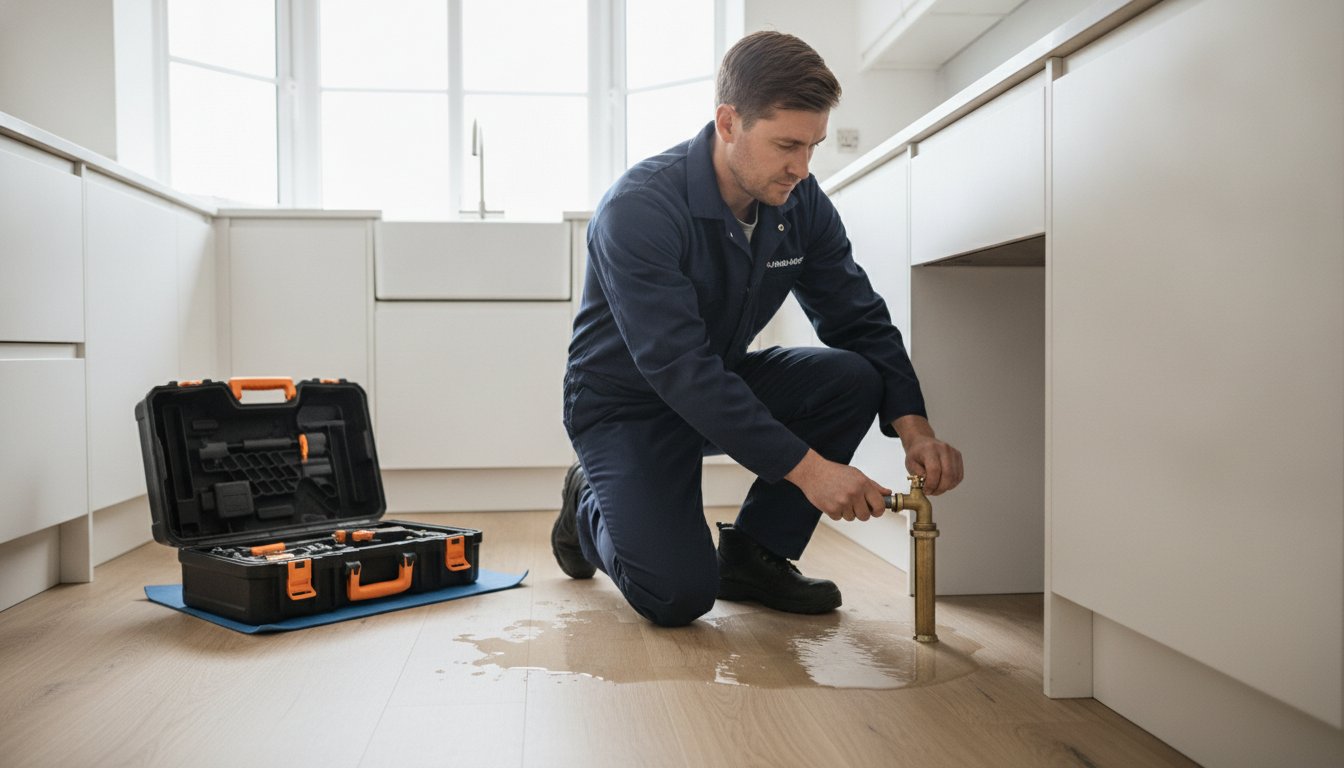
The sound of rushing water behind a plasterboard wall isn't just a nuisance; it’s the sound of your home’s value draining away in real-time. If you’ve just discovered a burst pipe what to do is likely the only question on your mind as you watch your carpets soak and your ceilings begin to sag. It's a high-stakes moment, and the rising panic is completely natural. You’re facing the immediate threat of structural damage and the terrifying risk of an electrical fire, but you can take control right now.
We know that in a domestic crisis, you need a first responder's precision. This guide delivers a 5-minute emergency protocol to stop the deluge and isolate your supply before the damage escalates. You'll learn how to protect your electrics, drain the system, and secure a professional on-site within the hour. Follow these steps to move from a flooded room to a secured home, ensuring your property is protected by the time the experts arrive.
Article Highlights:
- Stop the flooding instantly by closing your internal stopcock; knowing exactly for a burst pipe what to do in the first sixty seconds prevents a catastrophe.
- Safeguard your family from electrical hazards by isolating power at the consumer unit if water reaches sockets or switches.
- Protect your heating system from dry firing by turning off the boiler and flushing toilets to drain remaining water.
- Minimise structural damage and repair costs by moving furniture and collecting escaping water to save your flooring.
- Ensure long term safety by contacting a professional for an immediate repair that preserves your home's integrity.
Immediate Actions: The First 5 Minutes of a Burst Pipe Emergency
Your priority is containment. A single ruptured pipe can release hundreds of litres of water in minutes, saturating floorboards and ruining ceilings. When you are standing in a puddle, knowing exactly for a burst pipe what to do determines whether you face a minor repair or a total home renovation. Do not waste time looking for towels or buckets yet. You must stop the flow at the source. Every second the water remains under pressure, the more structural damage occurs. This is the critical window for understanding water damage prevention and taking decisive action.
Finding Your Stopcock in a Hurry
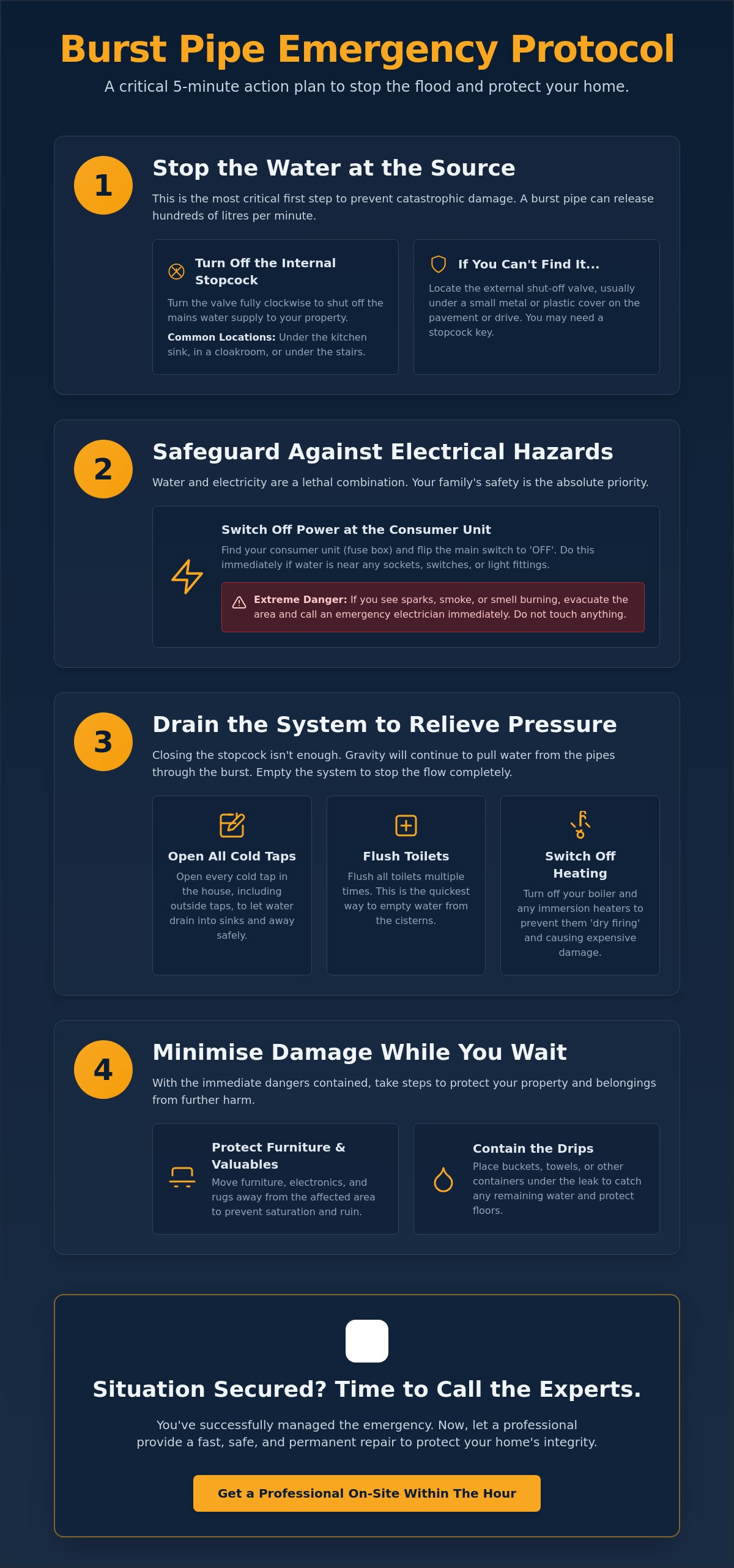
In most British homes, the internal stopcock is the primary kill-switch for your water supply. Check under the kitchen sink first. It is often tucked behind cleaning supplies or at the very back of the base unit. If it is not there, check the hallway, the cloakroom, or the area under the stairs. Look for a brass valve whilst clearing away any storage. Turn the handle fully clockwise to close it. If the valve is seized or you cannot find it, head outside. Locate the boundary box on the pavement near your property line. You may need a stopcock key or long-nosed pliers to reach the external shut-off valve and stop the flood. Knowing your burst pipe what to do plan starts with finding this valve before an emergency happens.
Isolating the Electrical Risk
Water and electricity are a lethal combination. If you see water dripping through a light fitting or running down a wall near a socket, do not touch the switch. The risk of a fire or a fatal shock is immediate. Head straight to your consumer unit, which is usually found in the garage, hallway, or under the stairs. Flip the large red "Main Switch" to the OFF position. This kills power to the entire property. If you notice sparks, a burning smell, or smoke, do not attempt to investigate. Clear the area and call an emergency electrician immediately. Safety always comes before property preservation.
Once the water is isolated, you must relieve the remaining pressure in the system. Open all cold water taps throughout the house. This allows the water sitting in the pipes to drain out safely into the sinks rather than through the burst. Avoid the temptation to use DIY repair tape or clamps on the rupture. High-pressure systems will blow through temporary fixes in seconds. These products are designed for minor drips, not emergency bursts. Focus on isolation and professional help instead. By draining the pipes now, you stop the gravity-fed leak that continues even after the stopcock is shut.
Draining the System: Why Closing the Stopcock Isn’t Enough
Closing the stopcock is only the first half of the battle. Whilst it stops new water from entering your home, your internal pipework still holds a significant volume of liquid. If your rupture is on a lower floor, gravity will pull every remaining drop through the break until the pipes are empty. To truly protect your property, you must drain the system. Knowing for a burst pipe what to do means understanding that pressure relief is just as important as isolation. You need to remove the "fuel" for the flood immediately.
Flush every toilet in the house multiple times. This is the fastest way to dump the contents of your cisterns safely down the drain rather than onto your carpets. Open all cold taps. Don't close them when the water slows down; wait until the flow stops entirely. If the water continues to run at full speed after several minutes, your stopcock may be faulty or not fully closed. Monitor the leak site closely. If the flow doesn't diminish, you are likely dealing with a storage tank issue rather than just mains pressure.
Managing the Central Heating and Boiler
Shut down your boiler or water heater immediately. Most modern units require a minimum water pressure to operate safely. If the system drains whilst the burner is active, the heat exchanger can overheat and crack. A dry boiler can lead to a costly replacement of the entire unit. Switch off any electric immersion heaters in your hot water cylinder and turn off any secondary pumps. If you are concerned about the safety of your appliances, an emergency boiler repair specialist can ensure your system is safe before it is restarted.
Header Tanks and Gravity-Fed Systems
In many British properties, the bathroom taps are fed by a large storage tank in the loft. This tank acts as a massive reservoir that will continue to feed a leak even if the mains supply is dead. Climb into the loft and locate the tank. If there is a gate valve on the outlet pipe, turn it clockwise to close it. If you cannot find a valve, tie up the ball valve arm using a piece of string to prevent the tank from refilling. Finally, open all hot taps to drain the hot water cylinder. This step is vital during cold snaps to prevent pipes from freezing in other parts of the system. Following this protocol is the most effective burst pipe what to do strategy for homes with traditional plumbing layouts.
Identifying the Cause: Frozen Pipes, Corrosion, or High Pressure?
Once you’ve stopped the flood, you need to understand the "why". Identifying the root cause is essential for a permanent fix and an accurate insurance claim. Inspect the damaged section closely. Are you looking at a tiny hairline crack or a jagged, longitudinal split? A long split along the length of the copper usually points to ice expansion. In contrast, a small hole surrounded by green or white crusty deposits indicates advanced corrosion. Knowing for a burst pipe what to do includes diagnosing the failure so it doesn't happen again next week. If the pipe looks healthy but has separated at a joint, high system pressure or "water hammer" is the likely culprit.
System pressure is often overlooked. If you hear a loud thumping sound when you turn off a tap, your pipes are under physical stress. This "water hammer" can eventually weaken joints until they fail entirely. Check your internal pressure if you have a gauge; anything over 4 bar in a domestic setting is excessive. Identifying these signs early can save you from a repeat performance of today's emergency. Look for signs of movement or loose pipe clips that may have contributed to the mechanical failure of the metal. These small details provide the evidence your insurer will look for when assessing the claim.
The Danger of the Thaw
Most people assume pipes burst during the freeze. In reality, the damage often reveals itself during the thaw. As ice forms, it expands and creates immense pressure between the ice blockage and a closed tap. This pressure eventually fractures the metal. When the ice melts, the water is finally free to escape through the new hole. Never use a blowtorch or any naked flame to thaw a pipe; the rapid heat change can cause further fractures or start a fire. Instead, use a hairdryer on a low setting or wrap the pipe in warm towels to protect your pipes from further stress. This gentle approach prevents the thermal shock that turns a frozen pipe into a burst one.
Corrosion and Ageing Infrastructure
If there hasn't been a cold snap, your pipes might simply be reaching the end of their lifespan. Look for "pitting" or green oxidation marks on older copper. These are signs of chemical reactions that thin the pipe walls over decades. Did the burst occur at a joint or along a straight run? Failures at joints often suggest poor installation or excessive vibration. Assess the colour of the surrounding pipework. If it is dull, flaky, or covered in white mineral deposits, the metal is likely brittle. After the immediate repair, consider if your home requires a partial or full repipe. Fixing a single leak on a corroded system is often just a temporary reprieve before the next section fails. A professional can help you decide if a simple patch is enough or if your infrastructure is compromised.
Damage Limitation: Cleanup and Insurance Evidence
The deluge has stopped. Now, the clock is ticking on your property’s recovery. Water is a silent destroyer of floorboards, joists, and internal finishes. You must act fast to limit the fallout. Grab buckets and plastic bins to catch any remaining drips from the ceiling. Clear the area. Move your favourite furniture and electronics to a dry room immediately. Do not wait for the carpets to dry on their own. Knowing for a burst pipe what to do at this stage is the difference between a simple cleanup and a massive insurance claim. Every minute water sits on a porous surface, the deeper the structural damage goes.
Evidence is your best friend when dealing with insurers. Grab your phone and start documenting. Take wide-angle photos of the flooded rooms and sharp close-ups of the ruptured pipe itself. List every high-value item that has been ruined by the water. Crucially, do not throw the broken pipe away once it is replaced. Keep the damaged section as physical proof for the loss adjuster. They need to see the failure to confirm it was a sudden event rather than long-term neglect. This simple step can save you thousands of pounds in disputed costs later.
Documenting the Crisis
Success with an insurance claim depends on the quality of your records. Start by capturing the scale of the incident with video and photos before you start the heavy cleaning. Record the exact time the leak was discovered to establish a clear timeline for your provider. Note down any high-value items, such as laptops, designer rugs, or antique furniture, that have been saturated. These details provide the evidence needed to ensure your claim is processed without delays. If the water has compromised your power supply, contact an Emergency Electrician to verify the safety of your circuits before you begin documenting near sockets.
Safe Water Removal
Standing water must go. Use a wet-dry vacuum or heavy-duty mops to clear the pools from your floors as quickly as possible. Open every window to encourage airflow. Proper ventilation is the only way to stop mould from taking hold in the damp patches. Avoid pointing heaters directly at wet walls or ceilings. The intense, localised heat can cause plaster to blow and wood to warp, creating more structural issues than the water itself. Stick to natural airflow and dehumidifiers where possible. This methodical approach ensures the drying process is thorough and does not cause secondary damage to your home's infrastructure.
Professional Burst Pipe Repair: Why Rapid Response Matters
The water is isolated. The taps are drained. But you are still standing in a damp home with a hole in your infrastructure. This is where professional intervention becomes a race against time. Most local plumbers spend their days on planned renovations or bathroom fittings. They are often unavailable for midnight call outs. An emergency plumber is different. They operate as first responders. Their sole focus is structural preservation. They arrive with the specialised tools needed to cut out damaged sections and restore your home’s integrity before the damp sets in permanently.
When the engineer arrives, expect a rapid diagnostic. They won't just look at the puddle. They will trace the pipe run to find every point of failure. They verify that your isolation was successful and then begin the physical repair. This usually involves replacing a section of copper or plastic pipework with high-grade, permanent fittings. Once the immediate crisis is over, they help you transition to a full system check. Knowing for a burst pipe what to do means recognising when your DIY limits are reached. Professional repair is the only way to ensure your insurance remains valid and your home remains dry.
The Emergency Angel Advantage
Speed is the only metric that matters during a flood. We provide 24/7 national coverage to ensure an engineer is always ready, regardless of the hour. Our team focuses exclusively on urgent repairs, not long-term kitchen installs. These are vetted professionals who understand the high stakes of a domestic flood. They arrive prepared for the worst-case scenario. You don't get a vague directory listing; you get a guaranteed response from someone who knows exactly how to stop the damage. Our priority is your relief and the safety of your property.
Next Steps After the Repair
Do not let the engineer leave without a written report. Your insurance provider will demand a professional account of the failure and the steps taken to rectify it. This document is the backbone of your claim. Ask the engineer to verify the integrity of the rest of your plumbing system. One burst often suggests the rest of your pipework is under stress. Taking these final steps ensures your home remains a safe haven rather than a ticking time bomb. For total peace of mind, Contact Emergency Angel now for immediate burst pipe assistance. Following this protocol is the final stage of your burst pipe what to do strategy.
Secure Your Home and Restore Control
You have moved from panic to precision. By locating your stopcock, isolating the electrical risk, and draining the remaining water, you have already prevented thousands of pounds in structural damage. The immediate threat is contained, but the recovery of your home depends on what happens next. Knowing for a burst pipe what to do in those first few minutes is vital, but a temporary fix isn't a permanent shield against future failures or mould growth.
Now is the time to hand over the heavy lifting to the professionals. We provide a 24/7 National Emergency Response with specialist emergency engineers ready for rapid dispatch. Our team focuses on urgent repairs to ensure your plumbing system is fully restored and your insurance evidence is properly documented. Don't leave your property's safety to chance after a flood. Every minute of dampness is a risk to your floorboards and joists.
Get a 24/7 Emergency Plumber on Site Now and let us finish the job of protecting your home. You have handled the crisis with absolute control; let us provide the expert resolution you deserve.
Frequently Asked Questions
Will my home insurance cover a burst pipe?
Standard UK home insurance usually covers the damage caused by a burst pipe under "escape of water" provisions. This typically pays for ruined carpets, saturated drywall, and damaged furniture. However, most basic policies won't cover the cost of the plumber’s repair to the pipe itself. You should check your policy for "trace and access" coverage, which pays for the cost of uncovering the leak and accessing the pipework.
How much does an emergency plumber cost in the UK?
Emergency plumbing costs in the UK depend on your location and the time of the call. Most professionals charge a fixed call-out fee followed by an hourly rate for the actual repair. Expect higher surcharges for bank holidays, weekends, or middle-of-the-night emergencies. It’s best to ask for a clear breakdown of these charges before the engineer is dispatched to your property. Always verify if VAT is included in the initial quote.
Can I stay in my house after a pipe bursts?
You can usually stay in your home if the damage is localised to one room. However, you must vacate if the water has compromised your electrical system or caused structural instability. If you are left without heating or water for more than 24 hours, your insurer might provide alternative accommodation. Always prioritise safety over convenience; if the ceiling is sagging or the power is out, the property is likely unsafe.
How long does it take to fix a burst water pipe?
A straightforward repair typically takes between one and three hours once the engineer arrives. This time includes identifying the rupture, cutting out the damaged section, and fitting a permanent replacement. If the pipe is buried deep behind a wall or under a concrete floor, the job will take longer. Draining the system and performing a final pressure test are essential steps that cannot be rushed during an emergency call.
What is the most common cause of burst pipes in the UK?
Freezing weather is the most frequent cause of pipe failures across the UK. When water turns to ice, it expands with enough force to fracture copper and plastic. In older British properties, internal corrosion and "pitting" also lead to sudden failures. High mains pressure can also stress joints until they fail entirely. Knowing for a burst pipe what to do includes checking your insulation before the winter starts to avoid these ruptures.
Should I turn off the gas if a pipe bursts?
You only need to turn off the gas if the water is directly affecting your boiler or other gas-fired appliances. If the leak is near the boiler, shut the gas off at the meter as a precaution. Your primary focus should remain on isolating the water supply and the electricity. If you smell gas or suspect a fault with the burner, contact a Gas Safe engineer immediately to inspect the unit after the water is stopped.
How do I prevent my pipes from bursting in the winter?
Prevention starts with foam lagging on all exposed pipes in unheated areas like lofts and garages. Keep your thermostat set to at least 12°C during cold snaps, even when you are away from home. This keeps the water above freezing and prevents ice from forming. Knowing for a burst pipe what to do is an essential skill, but maintaining your insulation and keeping the heating on low is the best way to avoid the crisis.
Can a burst pipe cause a ceiling to collapse?
Yes, a ceiling can collapse under the weight of trapped water and saturated plasterboard. If you notice a bulge or a "belly" forming in the ceiling, the risk is imminent. Clear the room of furniture and people immediately. You can relieve the weight by carefully poking a small hole in the centre of the bulge with a screwdriver, allowing the trapped water to drain safely into a bucket below rather than bringing the ceiling down.